
Deck Fixings
Quick answer
What fixings does a timber deck need?
One for each connection: post stirrups at the footings, bolts or coach screws from bearers to posts, triple grips, multi grips or joist hangers for the joists, and decking screws or hidden clips for the boards. A deck is exposed to the weather, so every fixing needs hot dip galvanising or stainless, and 316 stainless within 2m of a pool. Sizes, spans and spacing come from your plans, AS 1684 or your engineer.
Deck framing is a chain of connections
Posts to footings, bearers to posts, joists to bearers, a ledger to the house where the deck is attached, and the boards to the joists. Each one has its own fixing.
If you are working out how to build a deck, this guide covers one part of it: the fixing for each connection and the finish it needs. It does not cover sizes, spans, spacing or the number of fixings: those come from your plans, AS 1684 or your engineer. Below we walk the deck from the ground up.
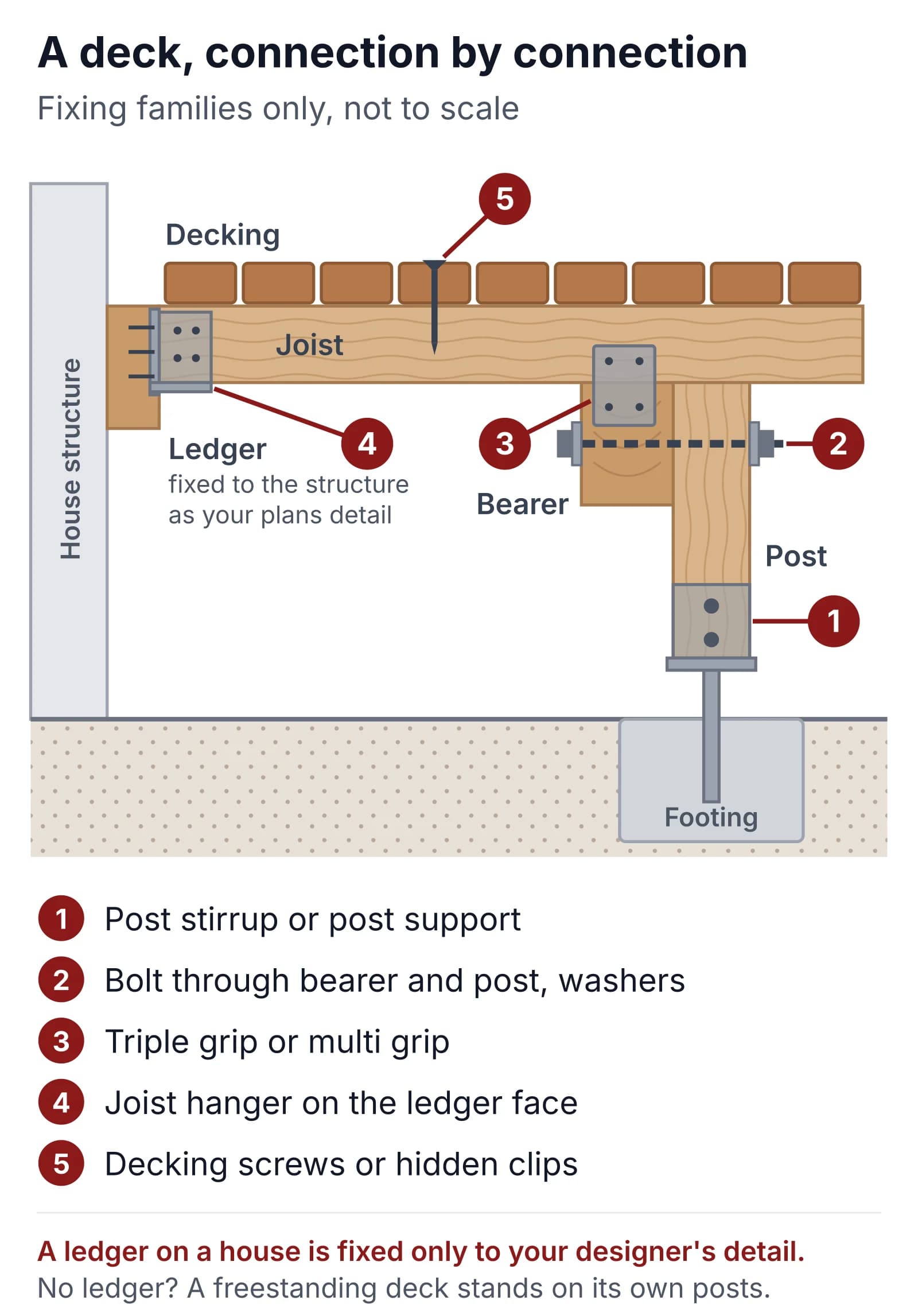
The fixing family for each connection. A ledger on a house is fixed only to your designer's detail; sizes, spans, spacing and footings come from your plans, AS 1684 or your engineer.
Posts to footings: cast-in or bolt-down
The post sits in a post stirrup or post support, which holds the timber clear of the concrete.
Use a cast-in stirrup when the footing is being poured, and a bolt-down support when fixing to an existing slab. Match the stirrup to the actual width of the post, for example a 90mm stirrup for a 90 x 90mm post.
The post is fixed through the stirrup with M12 bolts, washers and nuts.
Post supports and anchors
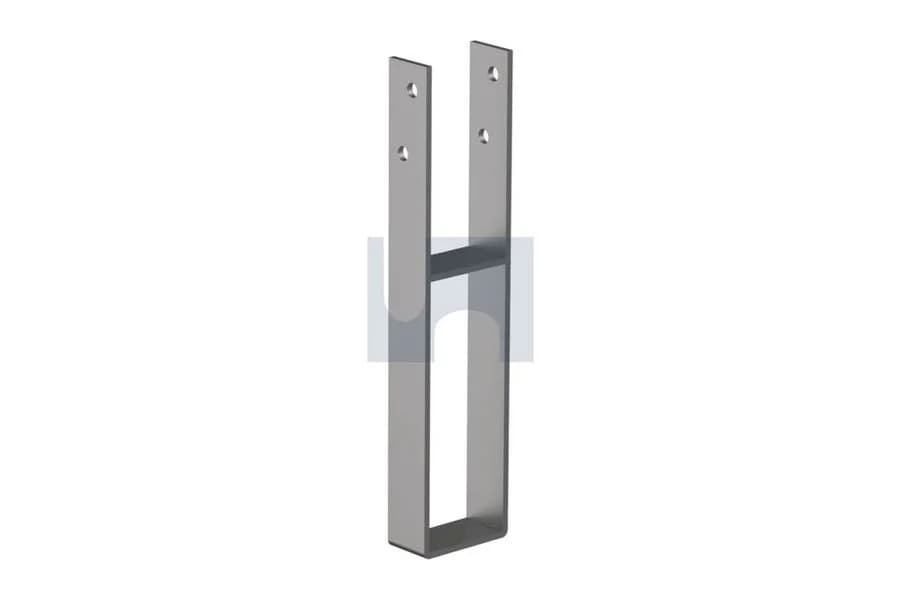
The manufacturer's heavy duty post supports are made from 50 x 6mm flat bar with M12 clearance holes.
Hot dip galvanised flat bar post supports
For posts 75 to 150mm wide, with stems 300 to 600mm long.
View the range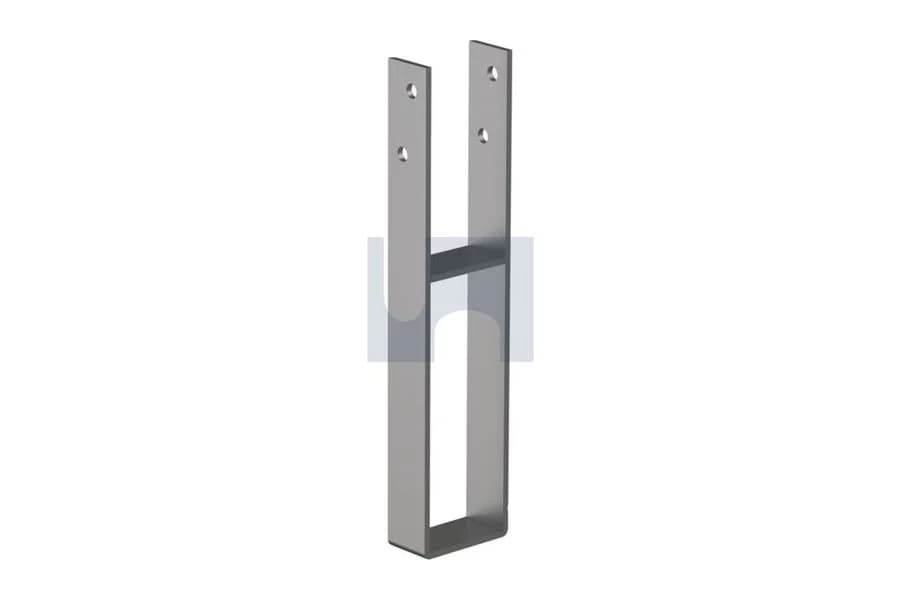
316 stainless post supports
For 90 and 100mm posts, with stems 450 or 600mm long.
View the range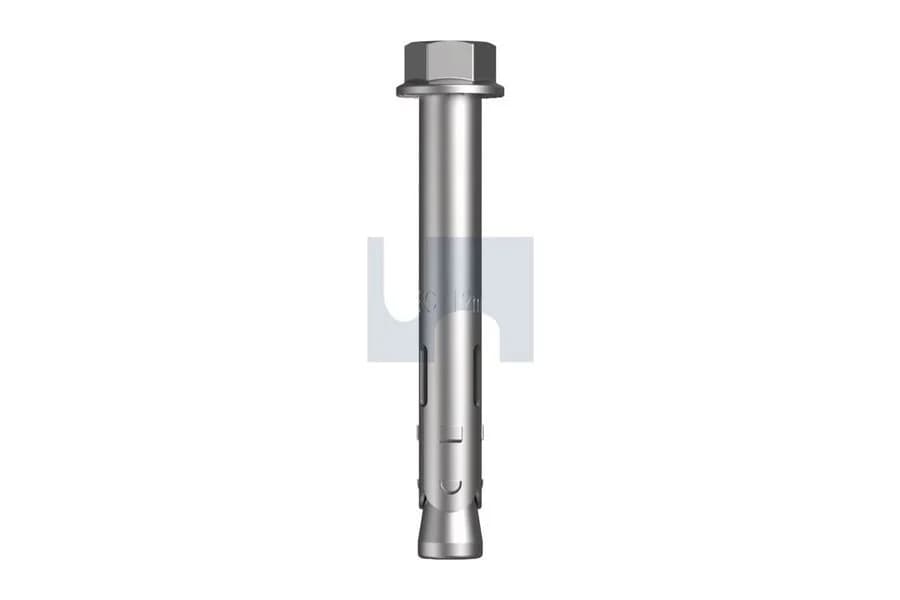
316 stainless sleeve anchors
Hold a bolt-down support to the slab. Sleeve anchors are for solid concrete.
View the rangeA bolt-down support is held to the slab with masonry anchors, such as Dynabolt-style sleeve anchors, masonry screw anchors or chemical anchors. Which anchor, its size and its edge distance come from the plans or your engineer.
Bearers to posts: bolts, coach screws and washers
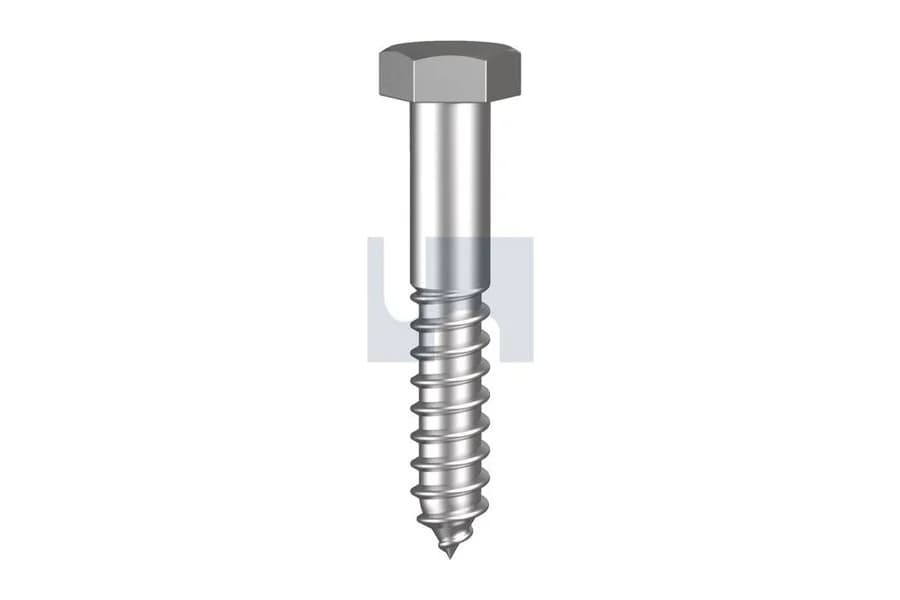
Bearers are fixed to posts with through bolts, such as coach bolts or hex bolts with nuts and washers, or with coach screws, as your plans set out.
Use a square washer or the washer the plans call for under the head and the nut, so the fixing does not pull into the timber.
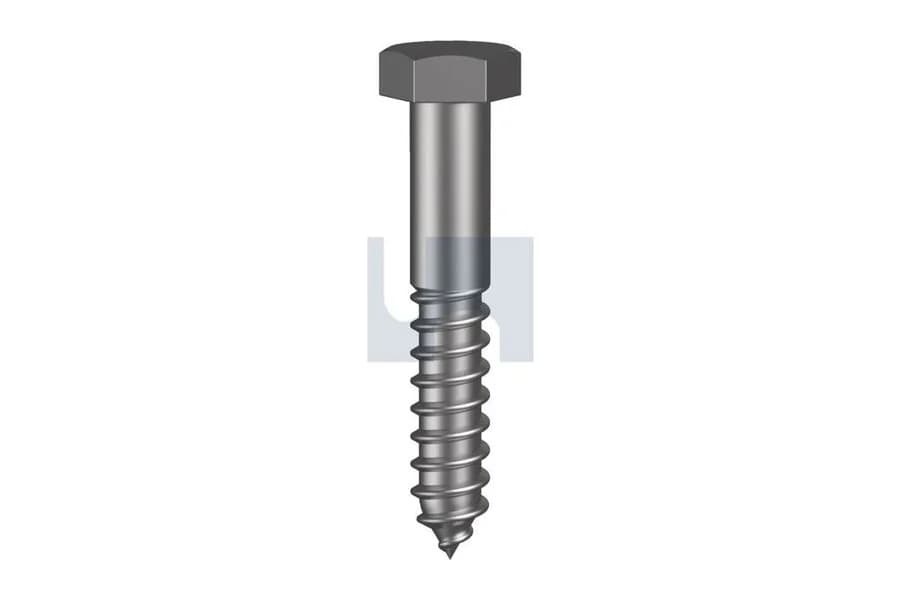
Pilot holes and washers: the manufacturer's installation points
From the manufacturer's technical note on the correct use of a coach screw.
Into timber
- Pilot hole: half the screw diameter in softwoods such as pine
- Three quarters of the diameter in hardwoods such as Merbau
- An M10 needs a 5mm pilot hole in softwood, 7.5mm in hardwood
- Fixture hole: 1mm larger than the coach screw diameter
- A washer under the head, to avoid over-tightening and driving the head into the timber
- Hardwood: dipping the screw in grease or lanolin reduces installation friction, especially with larger diameters
Finish
- Zinc plated: indoor use
- Hot dip galvanised: moderately corrosive outdoor use
- 316 stainless: highly corrosive and marine settings, and use in treated timbers
Fixing joists to bearers
One catch first: the manufacturer's galvanised connector sheet lists decking among the uses of its Z275 joist hangers, multi grips and triple grips, but its own corrosion guide does not list Z275 for exposed work, and a deck is exposed. So on a deck, use the 316 stainless connectors below.
Where joists sit on top of bearers, they can be fixed with triple grips or multi grips. Where joists butt into a bearer or beam, they hang in joist hangers.
Joist connectors and their nails
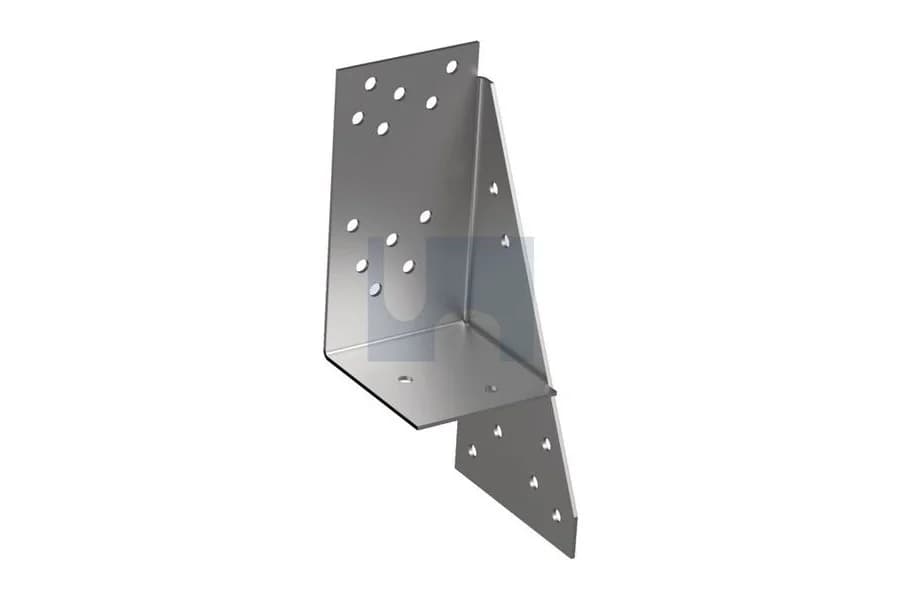
316 stainless triple grips
Folded steel, three nailed faces, left and right hand. The manufacturer publishes no design capacity for the 316 version, so its use on a deck needs your engineer's or designer's spec.
See the 316 range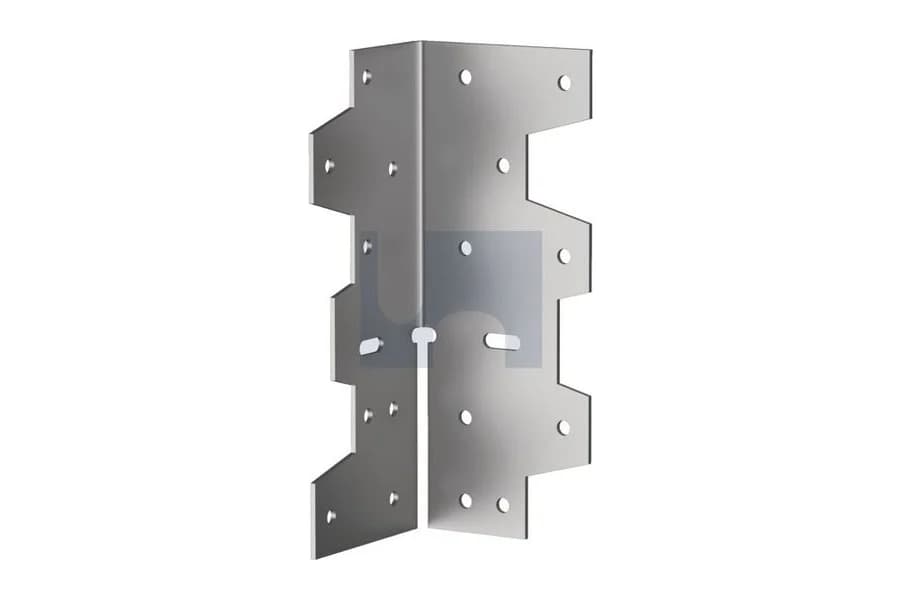
316 stainless multi grips
For joists sitting on top of bearers. The capacity data sheet we hold is for the galvanised version, so for the 316 one use the nailing and capacity your engineer or designer specifies.
See the 316 range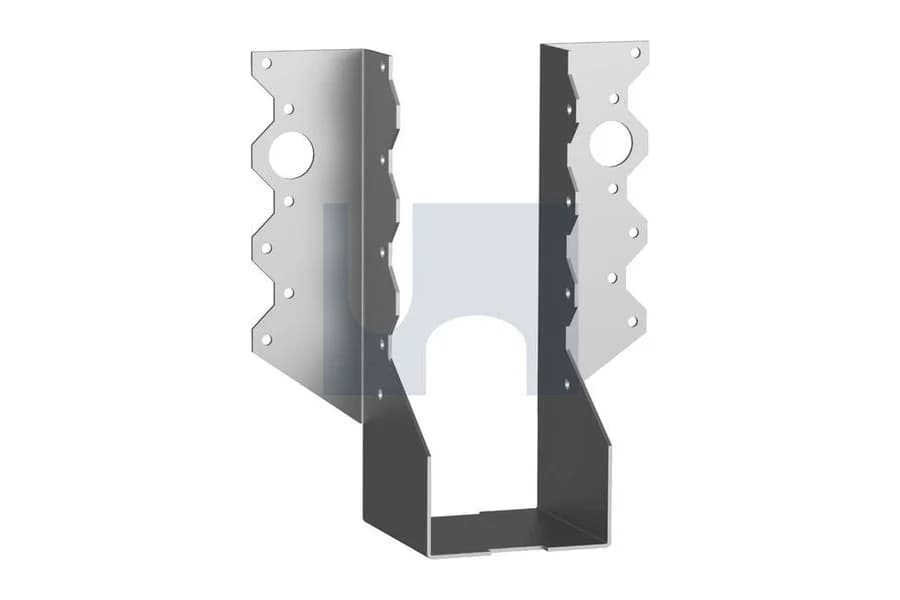
316 stainless joist hangers
For joists butting into a bearer, beam or ledger. The data sheet fixes each beam with the nails in its Table 2 (30 x 2.8mm stainless steel nails) or two M12 bolts with 50 x 3mm square washers.
See the 316 range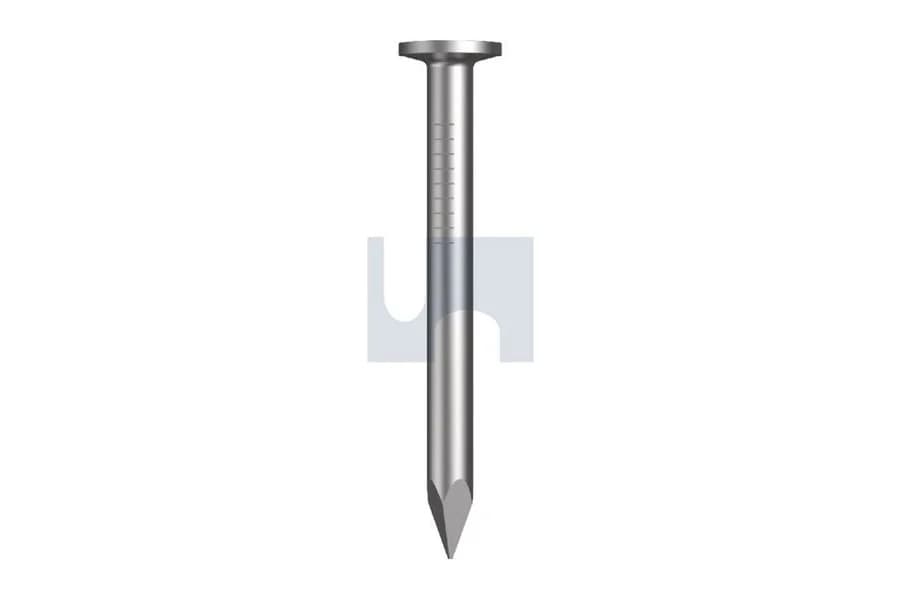
Joist hanger nails
Ours are mechanically galvanised. The 316 joist hanger data sheet calls for 30 x 2.8mm stainless steel nails, so for stainless hangers ask us for the matching nail.
View the rangeMatch the hanger to the joist, thickness first then depth, and fill every nail hole the data sheet calls for. The 316 stainless joist hanger sheet lists joists to beams and beams to masonry among its uses.
The manufacturer publishes design capacities for the galvanised Z275 triple grip (10 nails, 30 x 2.8mm hot dip galvanised, as the minimum), but none for the 316 stainless version, and Z275 is not listed for exposed connectors. So on a deck use the stainless connector where your engineer or designer specifies it, or a connector the plans name.
Which connector finish suits a deck?
| Feature | Galvanised Z275 | 316 stainless |
|---|---|---|
| Listed for exposed connectors in the manufacturer's corrosion guide | ✗ | ✓ |
| Called for within 2m of a pool edge | ✗ | ✓ |
| Design capacities published on the triple grip data sheet | ✓ | ✗ |
Ledger to the house: only to your designer's detail
When a deck is attached to the house, one side is carried by a ledger fixed to the building. Whether the house can carry a ledger at all, what it is fixed into, and the fixings, flashing and clearances are a structural detail from your plans or engineer, and may need council or certifier approval. Do not fix a ledger to a house without that detail.
A deck can also be built freestanding, on its own posts and bearers, with no ledger.
Where the plans do call for a ledger, the fixings come from the same families as the rest of the deck, in a finish made for the weather. Sleeve anchors are for solid concrete only; for anything else, follow the plans or ask us.
Boards: face screws or hidden clips
Most timber decks are face screwed with decking screws. Two from the manufacturer's Type 17 range are made for decks:
304 stainless self-embedding head: for timber decking in corrosive environments and suitable for treated pine. Ribs under the head let it finish flush with the board, with a square drive. Sizes run from 10-12 gauge at 40 to 75mm and 12-11 gauge at 50 to 100mm.
TYKOTE countersunk Torx: a 38 µm coating that the manufacturer describes as specially formulated for resisting treated pine chemicals, for treated pine and outdoor furniture. No pre-drilling is needed, and every carton includes a T25 driver bit.
Screws made for deck boards
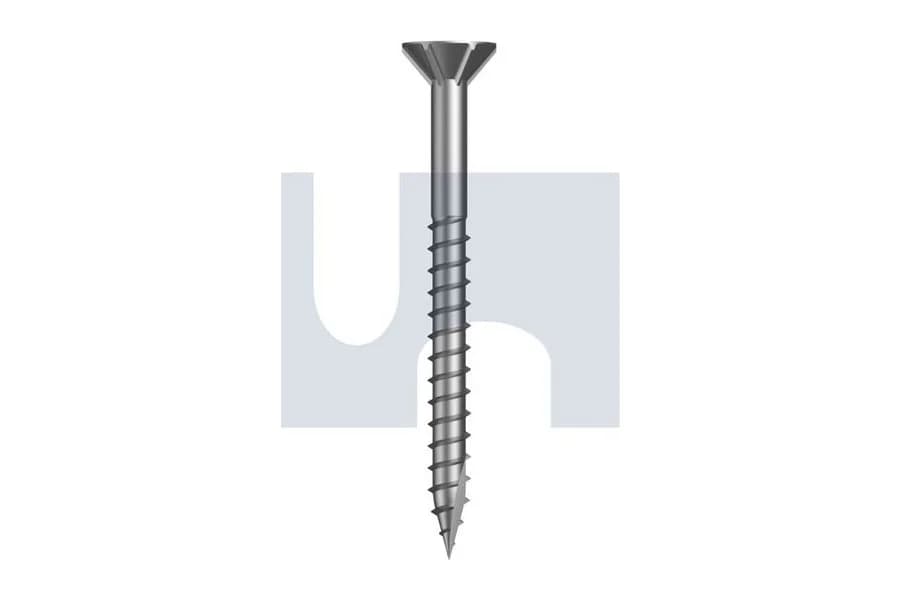
304 stainless self-embedding head
Made for timber decking in corrosive environments; suits treated pine and finishes flush.
View the range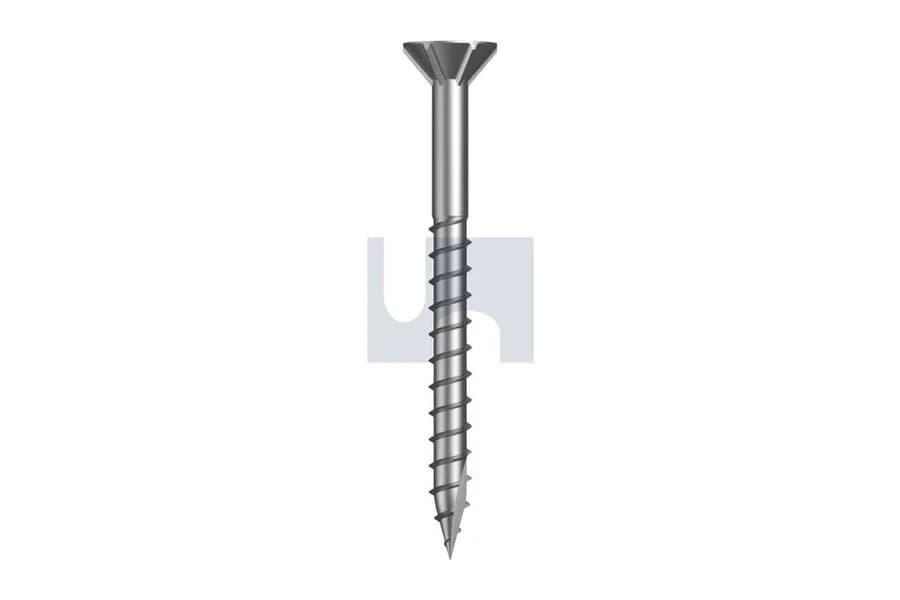
316 stainless self-embedding head
The same head in 316 (10 gauge at 40 to 75mm, 12 gauge at 130 and 150mm): for decks near the sea or within 2m of a pool.
View the range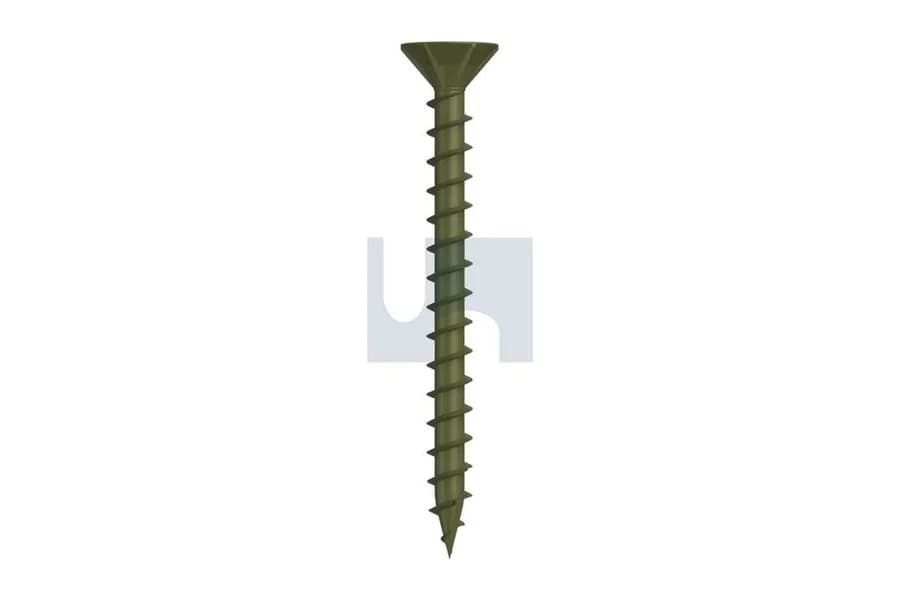
TYKOTE countersunk Torx
Coating formulated for resisting treated pine chemicals; no pre-drilling, T25 bit in every carton.
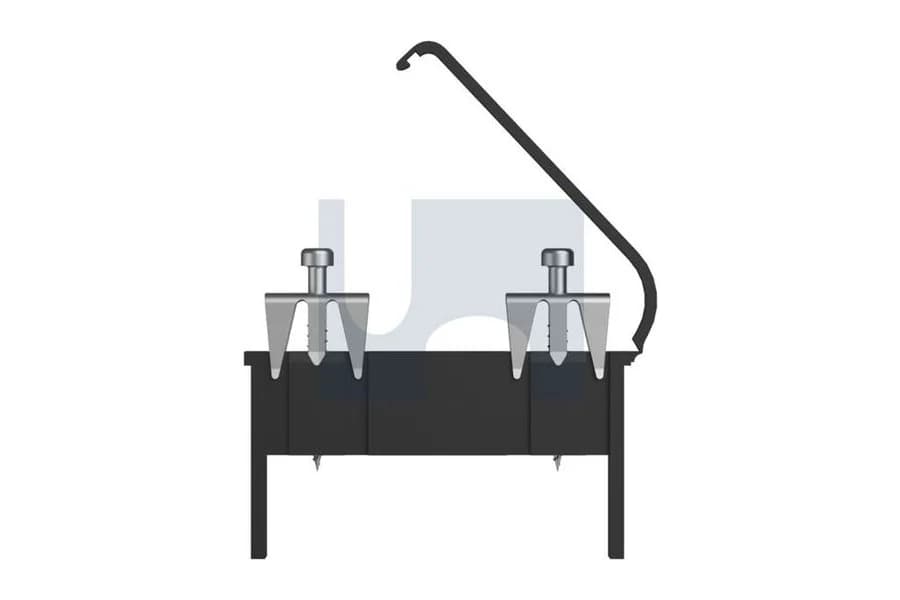
View the rangeFor a deck with no screw heads in the face, hidden decking clips such as the Deck Claw sit on the joists between the boards and set a 5mm gap; they suit 45mm wide timber joists. The manufacturer's figures are 14 per square metre with 140mm boards and 22 per square metre with 90mm boards.
Whichever you use, follow the decking board maker's fixing and gap rules, and keep the right driver bits on hand.
Finish by exposure: a deck is "exposed"
The manufacturer's corrosion guide defines exposed as locations exposed to weather and rain, and names decks, pergolas and open sub-floors as examples.
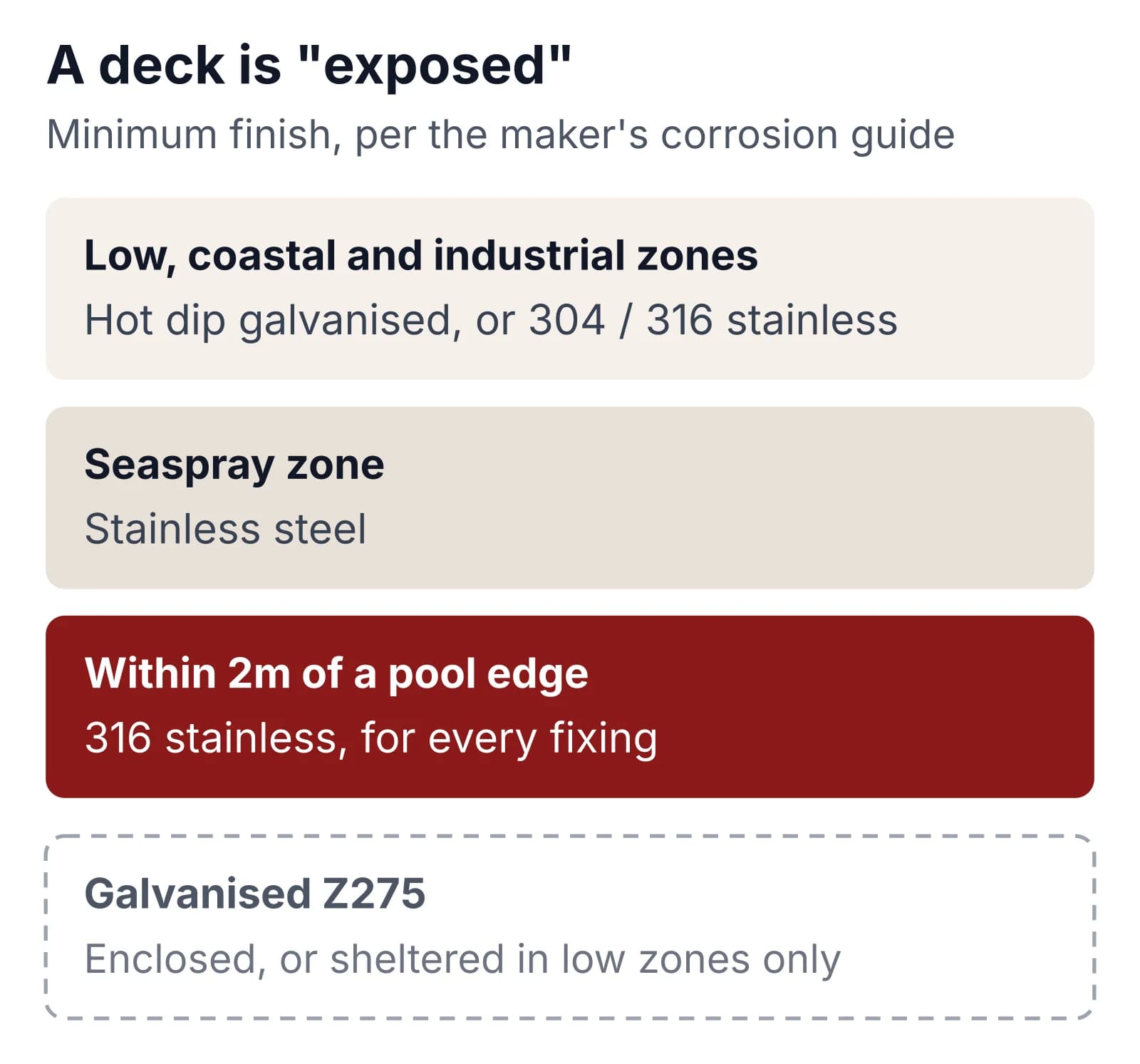
Minimum finish for exposed connectors in the manufacturer's corrosion guide.
For exposed connectors the guide's minimum is stainless 304 or 316, or hot dip galvanising, in low, coastal and industrial zones; stainless in the seaspray zone; and 316 stainless within 2m of a pool edge. Plain galvanised Z275 is listed only for enclosed work, and for sheltered work in low corrosion zones.
For the zones and the distances that set them, see fastener finishes and corrosion zones. For choosing between the stainless grades, see 304 vs 316 stainless.
Treated pine and fixings
Treated pine framing and decking need fixings made for it.
The manufacturer recommends 316 stainless coach screws for use in treated timbers, describes its TYKOTE coating as formulated for resisting treated pine chemicals, and lists its 304 stainless self-embedding decking screw as suitable for treated pine.
For what the H3 and H4 ratings mean, see treated timber explained.
Planning a deck? Send us your plans and we will put the timber and every fixing on one quote.
What this guide will not tell you: spans, sizes and footings
These are structural. They come from AS 1684 (residential timber-framed construction), the span tables published for your timber or engineered product, your decking board maker's instructions, or your engineer or designer.
Decided by your plans
- Post, bearer and joist sizes
- Spans and spacing
- Footing sizes and depths
- How many fixings go where
- How the deck is tied down
Your council or certifier may also need to approve the deck. This guide names the fixing for each connection; your plans decide the rest.
Timber and fixings, one order
Allmat supplies the whole deck: decking in Merbau, Spotted Gum and MexyTech composite, framing in MGP10 pine and LVL, and the fixings for every connection above.
Whether you are a builder, a carpenter or an owner-builder, order it together through Allmat: we pick and pack it, then you click and collect from the Allmat yard or we deliver to site.
Deck fixing questions
Stainless decking screws suit an exposed deck. Away from the coast, our 304 stainless self-embedding head Type 17 screws are made for timber decking in corrosive environments, suit treated pine, and finish flush with the board. Near the sea (ASSDA recommends 316 as a minimum within 5km of the surf) or within 2m of a pool, where the manufacturer's corrosion guide calls for 316, use the 316 self-embedding head screw (10 gauge, 40 to 75mm). Follow the decking board maker's fixing instructions for screw size and spacing.
We carry joist hangers in galvanised Z275 and 316 stainless. A deck is exposed to the weather, and the manufacturer's corrosion guide calls for stainless or hot dip galvanising for exposed connectors and does not list Z275 for exposed work, so for a deck use the 316 stainless hangers. Z275 suits framing inside the building envelope, and within 2m of a pool edge the guide calls for 316 stainless.
With a post stirrup or post support: a cast-in stirrup for a new footing, or a bolt-down support fixed to an existing slab with masonry anchors. Footing sizes, embedment and the anchor to use come from your plans or engineer.
Yes, into timber. The manufacturer's guide is a pilot hole of half the coach screw diameter in softwoods such as pine, and three quarters in hardwoods such as Merbau: for an M10, 5mm in softwood and 7.5mm in hardwood. The hole through the fixture should be 1mm larger than the screw, with a washer under the head.
For the Deck Claw hidden clip, the manufacturer's figures are 14 per square metre with 140mm boards and 22 per square metre with 90mm boards. Check the decking board maker allows hidden clips and the 5mm gap they set.
316 stainless. The manufacturer's corrosion guide treats anywhere within 2m of a pool edge as the pool splash zone and calls for 316 stainless steel for every fixing there, enclosed, sheltered or exposed.
That is a structural question this guide does not answer. Spans, spacing and member sizes come from AS 1684, the span tables published for your timber or engineered product, your decking board maker's instructions, or your engineer.
Sources
Facts in this guide come from the manufacturer's documents and the data on our product pages. Structural decisions are for your plans, AS 1684 and your engineer.
Corrosion Resistance of Metal Connectors
Correct Use of a Coach Screw
Heavy Duty Post Support (Did You Know)
Galvanised Timber Connectors (Did You Know)
316 Stainless Joist Hanger (Did You Know)
316 Stainless Joist Hanger data sheet (Table 2 nails, fixing steps)
Galvanised Triple Grip Connector data sheet
Type 17 Self-Embed Head (Did You Know)
Type 17 Countersunk Torx (Did You Know)
Product Finish Comparison (coatings chart)
Deck Claw Kit (Did You Know)
ASSDA: Preventing coastal corrosion (316 within 5km of the surf)
Timber and Fixings on One Order
Send us your deck plans or a materials list, and we will put the decking, framing and every fixing on one quote.
Need MexyTech boards for this deck?
Plan the deck on the MexyTech decking page and it counts the boards, the fixing box and the fascia with Allmat codes, ready to quote for delivery or collection across Adelaide and South Australia.