
304 (A2) · 316 (A4) · Aluminium 5052 / Aluminium 5052 · Aluminium 5052 / Zinc Steel · Aluminium 5056 / Phosphate · Aluminium 5056 / Zinc Steel · Copper / Phosphate · Copper / Zinc Steel · Monel / Zinc Steel · Zinc Steel
Pop Rivets (Blind Rivets)
Pop rivets and blind rivets that set from one side: dome, countersunk and large flange heads; open, sealed, multi-grip and peel bodies; aluminium, steel, stainless, Monel and copper, and painted heads in roofing colours.
About the Pop Rivets (Blind Rivets)
Pop rivets, or blind rivets, go in from one side and set with a rivet tool, for joining sheet metal, roofing and flashing, trailers, ducting and fabrication where you cannot reach the back. They come with dome, countersunk or large flange heads, in open, sealed, multi-grip and peel bodies, in aluminium, steel, stainless, Monel and copper, with painted heads in roofing colours. Choose the head, material and size above; the guide below explains rivet numbers, grip range and drill sizes.
Also called pop rivets or blind rivets.
Features
- Sets from one side (blind)
- Dome and countersunk heads
- Open, sealed, multi-grip and peel bodies
- Aluminium, steel and stainless
Applications
- Sheet metal and fabrication
- Roofing, flashing and cladding (painted and copper rivets)
- Soft materials and varying grip ranges (peel and multi-grip)
Choosing pop rivets
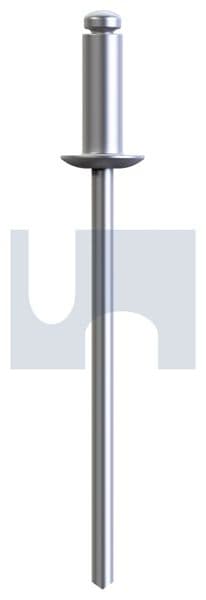
A pop rivet, or blind rivet, is a hollow shell on a steel or aluminium stem (the mandrel). It goes into a drilled hole from one side, and the rivet tool pulls the mandrel until the shell flares behind the work and the mandrel snaps off. That is why it is called blind: you never need to reach the back of the job.
Choose in four steps: the diameter for the strength you need, the grip range to suit the total thickness of the parts being joined, the head and body type for the job, and a material that suits the sheet you are fixing.
How to read rivet sizes: what #44 or 4-4 means
Trade rivets are sold by a two-part number, written #44 or 4-4. It is an old imperial system that is still the standard in the fastener trade, and once you know it you can read any rivet size at a glance.
Three digit numbers work the same way: a #410 is a 3.2mm rivet (4) for material up to 10/16 inch, which is 15.9mm.
#64
First digit = diameter
Measured in 32nds of an inch: 6/32 inch = 4.8mm.
Shortcut: 6 × 0.8 = 4.8mm
The rest = maximum grip
Measured in 16ths of an inch: 4/16 inch = 6.4mm thick.
Shortcut: 4 × 1.6 = 6.4mm
So a #64 (also written 6-4) is a 4.8mm rivet for material up to 6.4mm thick.
| Digit | Inches | mm |
|---|---|---|
| 3 | 3/32" | 2.4mm |
| 4 | 1/8" (4/32") | 3.2mm |
| 5 | 5/32" | 4.0mm |
| 6 | 3/16" (6/32") | 4.8mm |
| 8 | 1/4" (8/32") | 6.3mm |
| Digits | Inches | mm |
|---|---|---|
| 1 | 1/16" | 1.6mm |
| 2 | 1/8" (2/16") | 3.2mm |
| 3 | 3/16" | 4.8mm |
| 4 | 1/4" (4/16") | 6.4mm |
| 5 | 5/16" | 7.9mm |
| 6 | 3/8" (6/16") | 9.5mm |
| 8 | 1/2" (8/16") | 12.7mm |
| 10 | 5/8" (10/16") | 15.9mm |
| 12 | 3/4" (12/16") | 19.1mm |
| 14 | 7/8" (14/16") | 22.2mm |
| 16 | 1" (16/16") | 25.4mm |
| 20 | 1-1/4" (20/16") | 31.8mm |
Pop rivet sizes: grip range, length and drill size chart
Each number covers a grip range: from just over the next size down up to its maximum. A #44 grips 4.9 to 6.4mm; for thinner material choose a #43 or #42, so the rivet forms tightly behind the work.
Some sellers list rivets in metric as diameter x length instead, such as 3.2 x 10mm. That is the length of the rivet body, not the thickness it grips, so check the grip range before you buy. The table gives the length of each number so you can compare.
Grip range is the combined thickness of everything the rivet clamps together. Measure it, then pick the rivet whose range covers it: too short and it will not form properly behind the work, too long and it will not pull up tight. Drill the hole just over the rivet diameter.
Every dome head rivet number we carry, from the manufacturer grip range chart, grouped by diameter and then grip. Drill size is just over the rivet's maximum body diameter. Tap a number to show it in the selector above.
| Rivet | Diameter | Length | Grip range | Drill |
|---|---|---|---|---|
| 2.4mm rivets | ||||
| #32 | 2.4mm | 6.4mm | 0.5 to 3.2mm | 2.5mm |
| 3.2mm rivets | ||||
| #41 | 3.2mm | 5.4mm | 0.5 to 1.6mm | 3.3mm |
| #42 | 3.2mm | 7mm | 1.7 to 3.2mm | 3.3mm |
| #43 | 3.2mm | 8.6mm | 3.3 to 4.8mm | 3.3mm |
| #44 | 3.2mm | 10.2mm | 4.9 to 6.4mm | 3.3mm |
| #45 | 3.2mm | 11.7mm | 6.5 to 7.9mm | 3.3mm |
| #46 | 3.2mm | 13.4mm | 8.0 to 9.5mm | 3.3mm |
| #48 | 3.2mm | 16.5mm | 9.6 to 12.7mm | 3.3mm |
| #410 | 3.2mm | 19.7mm | 12.8 to 15.9mm | 3.3mm |
| #412 | 3.2mm | 22.9mm | 16.0 to 19.1mm | 3.3mm |
| 4.0mm rivets | ||||
| #52 | 4.0mm | 7.6mm | 0.5 to 3.2mm | 4.1mm |
| #53 | 4.0mm | 9.2mm | 3.3 to 4.8mm | 4.1mm |
| #54 | 4.0mm | 10.8mm | 4.9 to 6.4mm | 4.1mm |
| #55 | 4.0mm | 12.1mm | 6.5 to 7.9mm | 4.1mm |
| #56 | 4.0mm | 14mm | 7.9 to 9.5mm | 4.1mm |
| #58 | 4.0mm | 17.2mm | 9.6 to 12.7mm | 4.1mm |
| #510 | 4.0mm | 20.3mm | 12.8 to 15.9mm | 4.1mm |
| 4.8mm rivets | ||||
| #62 | 4.8mm | 8.3mm | 0.5 to 3.2mm | 4.9mm |
| #63 | 4.8mm | 9.8mm | 3.3 to 4.8mm | 4.9mm |
| #64 | 4.8mm | 11.5mm | 4.9 to 6.4mm | 4.9mm |
| #65 | 4.8mm | 12.9mm | 6.5 to 7.9mm | 4.9mm |
| #66 | 4.8mm | 14.6mm | 8.0 to 9.5mm | 4.9mm |
| #68 | 4.8mm | 17.8mm | 9.6 to 12.7mm | 4.9mm |
| #610 | 4.8mm | 21mm | 12.8 to 15.9mm | 4.9mm |
| #612 | 4.8mm | 24.2mm | 16.0 to 19.1mm | 4.9mm |
| #614 | 4.8mm | 27.3mm | 19.2 to 22.2mm | 4.9mm |
| #616 | 4.8mm | 30.5mm | 22.3 to 25.4mm | 4.9mm |
| #620 | 4.8mm | 36.8mm | 28.7 to 31.8mm | 4.9mm |
| 6.3mm rivets | ||||
| #82 | 6.3mm | 9.5mm | 0.5 to 3.2mm | 6.5mm |
| #84 | 6.3mm | 12.7mm | 3.3 to 6.4mm | 6.5mm |
| #85 | 6.3mm | 14.4mm | 6.5 to 8.0mm | 6.5mm |
| #86 | 6.3mm | 15.9mm | 8.1 to 9.5mm | 6.5mm |
| #88 | 6.3mm | 19.1mm | 9.6 to 12.7mm | 6.5mm |
| #810 | 6.3mm | 22.2mm | 12.8 to 15.9mm | 6.5mm |
| #812 | 6.3mm | 25.4mm | 16.0 to 19.1mm | 6.5mm |
| #814 | 6.3mm | 28.6mm | 19.2 to 22.2mm | 6.5mm |
| #816 | 6.3mm | 31.8mm | 22.3 to 25.4mm | 6.5mm |
Head and body types
- Dome head (truss head, type 73): the most common head. It sits above the surface and suits most work.
- Countersunk head (type 72): sits flush in a countersunk hole, so nothing protrudes from the face.
- Large flange: a bigger head that spreads the load on soft or thin materials.
- Open: the everyday body. The set rivet is not sealed by the mandrel.
- Sealed: the mandrel head stays captured inside a closed-end shell, so there is no gap for water or air. Use it on roofs, gutters and anything that must stay watertight.
- Multi-grip: one rivet covers a wider range of thicknesses, handy when the material varies.
- Peel: the shell peels open into petals, holding soft materials without distorting them. Useful on uneven surfaces.
Aluminium, steel, stainless, Monel or copper?
As a rule, match the rivet material to the sheet you are fixing. Joining different metals in the wet can cause corrosion of the weaker metal.
- Aluminium rivets with a steel mandrel: the general purpose choice for sheet metal, aluminium and light fabrication.
- All aluminium (aluminium mandrel): no steel left in the set rivet.
- Steel: higher strength for steel fabrication.
- 304 and 316 stainless rivets: for stainless sheet and wet or coastal work; 316 for marine conditions.
- Monel rivets (nickel copper): strong and corrosion resistant.
- Copper: for copper roofing, flashing and decorative work. It has higher tensile and shear values than aluminium.
Painted rivets for roofing and cladding
Painted dome head rivets come with the head coloured to match popular roofing and cladding colours, including Surfmist, Monument, Woodland Grey, Night Sky, Shale Grey, Classic Cream, Dune, Paperbark, Basalt and many more. Use them on flashings, gutters, downpipes and cladding where a silver rivet head would stand out. Pick the colour in the selector above.
How to set a pop rivet
- Clamp or hold the parts together and drill straight through both at the recommended drill size.
- Fit the mandrel of the rivet into the nose of the rivet tool.
- Push the rivet into the hole until the head sits flat against the work.
- Hold the tool square to the surface and squeeze the handles, repeating until the mandrel snaps off.
- Check the head is tight and flat. Drop the spent mandrel in a bin, not on the roof, where it will rust and stain.
Rivets in Adelaide
Allmat supplies pop rivets, rivet nuts and fixings to roofers, builders, fabricators and trade across Adelaide and South Australia. Add the rivets you need to a quote with the screws and fixings for the job, and we will price the lot.
Rivets for roofing, cladding and fabrication
Pop rivets in every common size, material and roofing colour are available to order from Allmat for roofers, builders, fabricators and trade across Adelaide and South Australia. Order through Allmat, we pick and pack it, then click and collect from the Allmat yard or have it delivered to site.
Goes with
Questions
What do rivet numbers like #44 mean?
The first digit is the diameter in 32nds of an inch (4 = 3.2mm, 5 = 4.0mm, 6 = 4.8mm) and the rest is the maximum grip in 16ths of an inch (4 = 6.4mm). A #44 is a 3.2mm rivet for a total material thickness of 4.9 to 6.4mm.
Is a #44 rivet the same as a 4-4 or a 3.2 x 10mm rivet?
A #44 and a 4-4 are the same rivet: 3.2mm diameter for up to 6.4mm of material. Its body is about 10.2mm long, so it is close to a rivet sold as 3.2 x 10mm, but always compare the grip range, which is what decides whether it will hold your material.
How do I work out a rivet size from its number?
Multiply the first digit by 0.8 for the diameter in mm, and the rest by 1.6 for the maximum material thickness in mm. A #54 is 5 x 0.8 = 4.0mm diameter for up to 4 x 1.6 = 6.4mm of material.
How do I drill out a pop rivet?
Use a drill bit the same size as the rivet (3.2mm for a 3.2mm rivet), drill into the centre of the head until it comes off, then punch the rest of the rivet through.
What size drill do I need for a pop rivet?
Drill just over the rivet diameter: 2.5mm for a 2.4mm rivet, 3.3mm for 3.2mm, 4.1mm for 4.0mm, 4.9mm for 4.8mm, and 6.5mm for a 6.3mm (1/4 inch) rivet.
What is the grip range of a rivet?
The total thickness of all the parts the rivet clamps together. Measure the stack and choose the rivet whose grip range covers it.
What is the difference between open and sealed rivets?
An open rivet leaves the centre of the set rivet open. A sealed rivet has a closed end that captures the mandrel head, so no water or air can pass through. Use sealed rivets on roofs, gutters and anything that must stay watertight.
What rivets should I use on a COLORBOND roof or gutter?
A sealed or painted dome head rivet in a colour to match the sheet. Painted rivets come in Surfmist, Monument, Woodland Grey and many other roofing colours. Collect the spent mandrels so they do not rust on the roof.
Are multi-grip rivets better?
A multi-grip rivet covers a wider thickness range than a standard rivet, so one size suits more jobs. Use a standard rivet when you know the thickness and want the neatest finish.
Where can I buy rivets in Adelaide?
Order through Allmat. We supply pop rivets in every common size, material and roofing colour to trade across Adelaide. Order ahead by phone on 1300 03 03 63 or send your list for a quote, then click and collect from 25 Kapara Road, Gillman, or have them delivered to site.
Pop Rivets (Blind Rivets): sizes and finishes we supply
454 lines by type and finish. Pick one above for its product code, pack sizes and dimensions.
| Type | Finish | Sizes | Lengths | Lines |
|---|---|---|---|---|
| Dome, open | Painted | #42, #43, #44, #45, #46, #54, #55, #63, #64, #88 | - | 131 |
| Dome, open | Aluminium | #32, #33, #41, #42, #43, #44, #45, #46, #48, #410, #412, #52, #53, #54, #55, #56, #58, #510, #62, #63, #64, #65, #66, #68, #610, #612, #614, #616, #620, #82, #84, #85, #86, #88, #810, #812, #814, #816 | - | 73 |
| Dome, multi-grip | Painted | #45, #54, #56, #64, #68, #84 | - | 62 |
| Dome, open | 304 Stainless | #41, #42, #43, #44, #45, #46, #48, #410, #52, #53, #54, #55, #56, #58, #62, #63, #64, #65, #66, #68, #610, #612, #84, #86, #88, #810, #812 | - | 27 |
| Dome, sealed | Aluminium | #42, #43, #44, #45, #46, #52, #53, #54, #55, #56, #62, #63, #64, #65, #66, #68, #610, #612, #84, #86, #810 | - | 23 |
| Dome, open | Steel | #42, #43, #44, #45, #46, #48, #52, #53, #54, #56, #58, #62, #63, #64, #65, #66, #68, #610, #612, #616, #84, #86, #88 | - | 23 |
| Dome, open | Monel | #41, #42, #43, #44, #45, #46, #52, #53, #54, #55, #56, #62, #63, #64, #65, #66, #68 | - | 17 |
| Countersunk, open | 304 Stainless | #42, #43, #44, #46, #52, #53, #54, #56, #64, #66, #68, #610, #88, #810, #812 | - | 15 |
| Countersunk, open | Aluminium | #42, #43, #44, #46, #48, #53, #54, #56, #62, #63, #64, #66, #68, #610 | - | 14 |
| Dome, large flange | Aluminium | #42, #44, #46, #48, #54, #56, #63, #64, #66, #68, #610, #612, #614, #616 | - | 14 |
| Dome, sealed | 304 Stainless | #42, #43, #44, #46, #52, #54, #56, #62, #64, #66 | - | 10 |
| Dome, open | 316 Stainless | #43, #44, #45, #52, #53, #54, #66, #68, #88 | - | 9 |
| Dome, peel | Aluminium | #48, #64, #65, #66, #68, #610, #612 | - | 7 |
| Countersunk, open | Monel | #42, #43, #44, #54, #64, #66, #68 | - | 7 |
| Dome, multi-grip | Aluminium | #43, #45, #54, #56, #64, #68, #84 | - | 7 |
| Countersunk, sealed | Aluminium | #42, #43, #56, #64 | - | 4 |
| Dome, open | Copper | #42, #43, #44 | - | 3 |
| Dome, large flange | 304 Stainless | #64, #66 | - | 2 |
| Countersunk, open | Steel | #42, #66 | - | 2 |
| Dome, sealed | Painted | #54, #63 | - | 2 |
| Dome | Aluminium | 3.2-4.8 | 6-15MM | 1 |
| Dome, sealed | Steel | #42 | - | 1 |
Data sheets and documents
The documents for the product you choose are listed with the selector above. Here is every Pop Rivets (Blind Rivets) document from Hobson Engineering.
All Pop Rivets (Blind Rivets) documents (15)
Data sheets and technical data (6)
Did You Know flyers (6)
Guides and articles (3)
Need them in bulk?
Add the sizes you need to your quote, or send us your list and we’ll price the lot and supply it with the rest of your order.
Browse all rivets