
Structural Flooring · Adelaide & SA
Particle Board Flooring
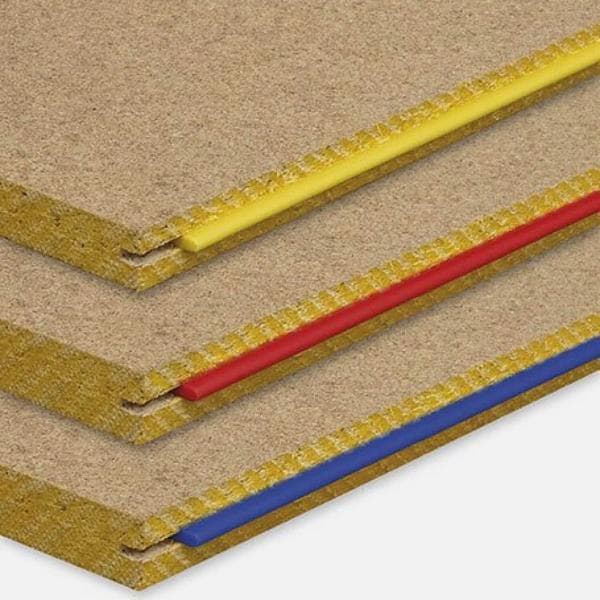
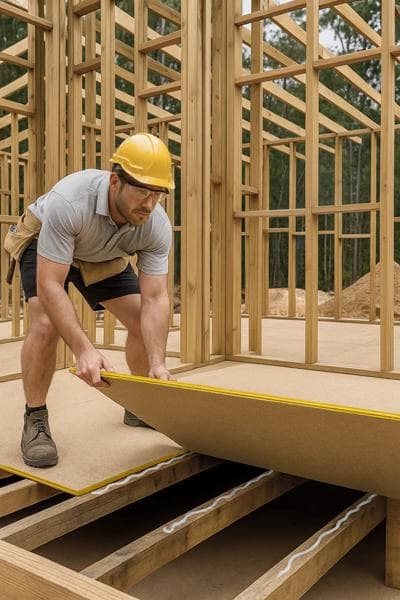
Particle board flooring, better known and searched as yellow tongue, is the structural tongue and groove sheet flooring laid over floor joists to form a subfloor. The tongue is colour coded by thickness, yellow for 19mm, red for 22mm and blue for 25mm. Allmat supplies yellow tongue flooring across Adelaide and South Australia in General Purpose, termite treated and foil backed Ultimate, all to AS/NZS 1860.1.
Delivered across Adelaide and South Australia. Pickup available.
- Adelaide and SA building supplier
- Structaflor and EnduraFloor
- Made to AS/NZS 1860.1
- Delivery and pickup
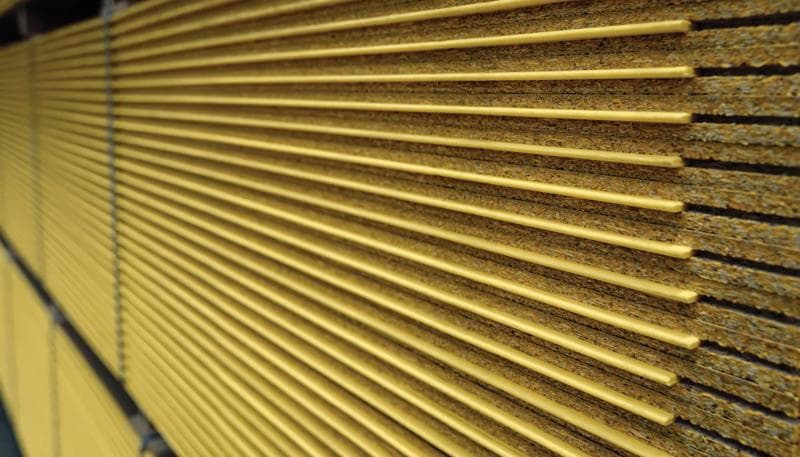
What the tongue colours mean
The coloured tongue tells you the thickness at a glance, and the thickness you need is set by how far apart your floor joists are. Structaflor and EnduraFloor use different colours for the same thicknesses, so both are shown below.
| Thickness | Structaflor tongue | EnduraFloor tongue | Joist centres | Typical use |
|---|---|---|---|---|
| 19mm | Yellow tongue | Green tongue | up to 450mm | Residential, general purpose |
| 22mm | Red tongue | Beige tongue | up to 600mm | Residential and light commercial |
| 25mm | Blue tongue | Brown tongue | up to 600mm | Heavier loads, commercial |
Where it’s used
Yellow tongue is the go-to structural subfloor for Adelaide builders and renovators.
- New home subfloors, platform and fitted construction
- Extensions and second storey floors
- Mezzanine, shed and outbuilding floors
- Re-sheeting or replacing an existing floor
- A substrate for tiling or vinyl over wet-area waterproofing
Building or renovating a whole project? We can include your flooring in a job-lot quote and price all your materials together.
How many sheets do I need?
Enter your floor size and we will work out the sheets, plus the flooring screws for the area.
Enter your floor length and width to see the sheets and screws you need.
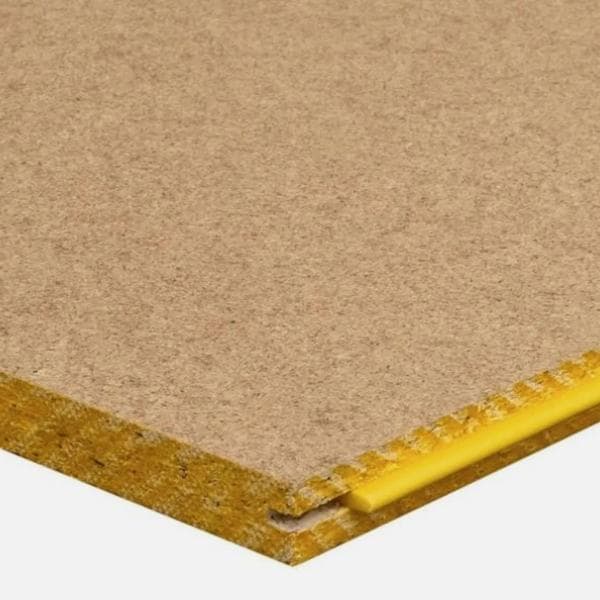
Yellow Tongue Particle Board Flooring
3600 × 800 × 19mm · General Purpose
Product code PBFGP19
- Length
- 3600 mm
- Width
- 800 mm
- Thickness
- 19 mm
Structaflor or EnduraFloor · AS/NZS 1860.1
Build your flooring quote
Grade
Thickness (tongue colour)
Length
Width
Suits joists up to 450mm centres · about 13 kg/m² · tongue & groove, wax sealed edges
Add to your quote for a free price. Both brands meet the same standard, so we supply whichever is available when your order is packed, or the brand you ask for.
Fixings and adhesive
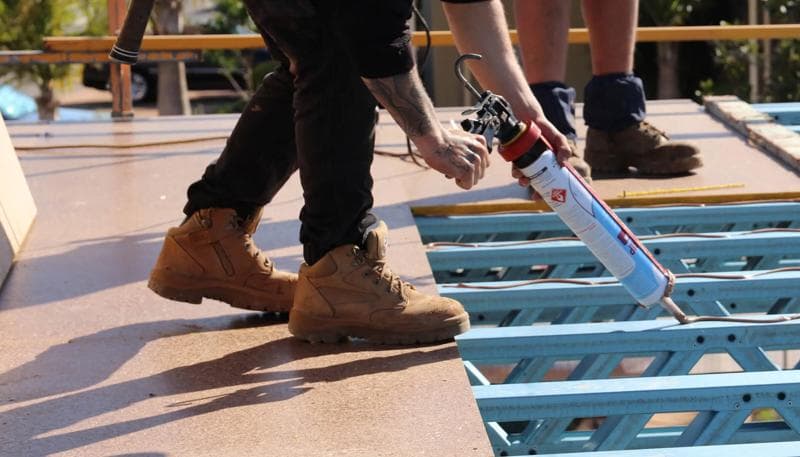
Particle board flooring is glued and screwed down to the joists, using the screw the board maker's guide names. On timber joists, Structaflor and EnduraFloor both name a Type 17 countersunk self-drilling screw of at least 10g × 50mm for 19 and 22mm sheet, and Structaflor names 14g × 65mm for its 25mm sheet. Steel joists take a countersunk self-embedding head screw, 9g or 10g × 45mm. The adhesive is a flooring or subfloor construction adhesive, run along the joists before each sheet is laid. Add fixings to your quote and we will match them to your floor.
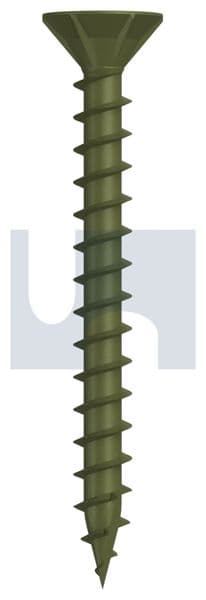
Recommended fixing
Type 17 countersunk screw, 10g × 50mm
Countersunk, self-drilling Type 17 point, T25 Torx drive, Tykote coating · Box of 500
The Type 17 countersunk screw the flooring makers name for 19 and 22mm sheet on timber joists. For 25mm sheet, Structaflor names 14g × 65mm; we match that on your quote.
Structaflor's figure is 40 screws for a 3600 × 800 sheet on joists at 450mm centres: 150mm apart along the edges and 250mm in the body of the sheet. A box of 500 does about 12 sheets, and the estimator above works out how many you need for your floor.
If the floor will be rained on before it is closed in, EnduraFloor asks for a zinc electroplated screw with a Type C yellow chromate coating to AS 1789. Tell us when you send your quote and we will match it.
The same product, multiple brands
Particle board flooring, yellow tongue flooring, is a standardised product made to AS/NZS 1860.1 whoever makes it. The brands you will see most are Structaflor (Porta), with yellow, red and blue tongues for 19, 22 and 25mm, and EnduraFloor (Laminex), with green, beige and brown for the same thicknesses. Any board to that standard does the same job.
Because they meet the same standard, either brand does the job. We supply whichever is available when your order is packed, or a specific brand if you ask for one.
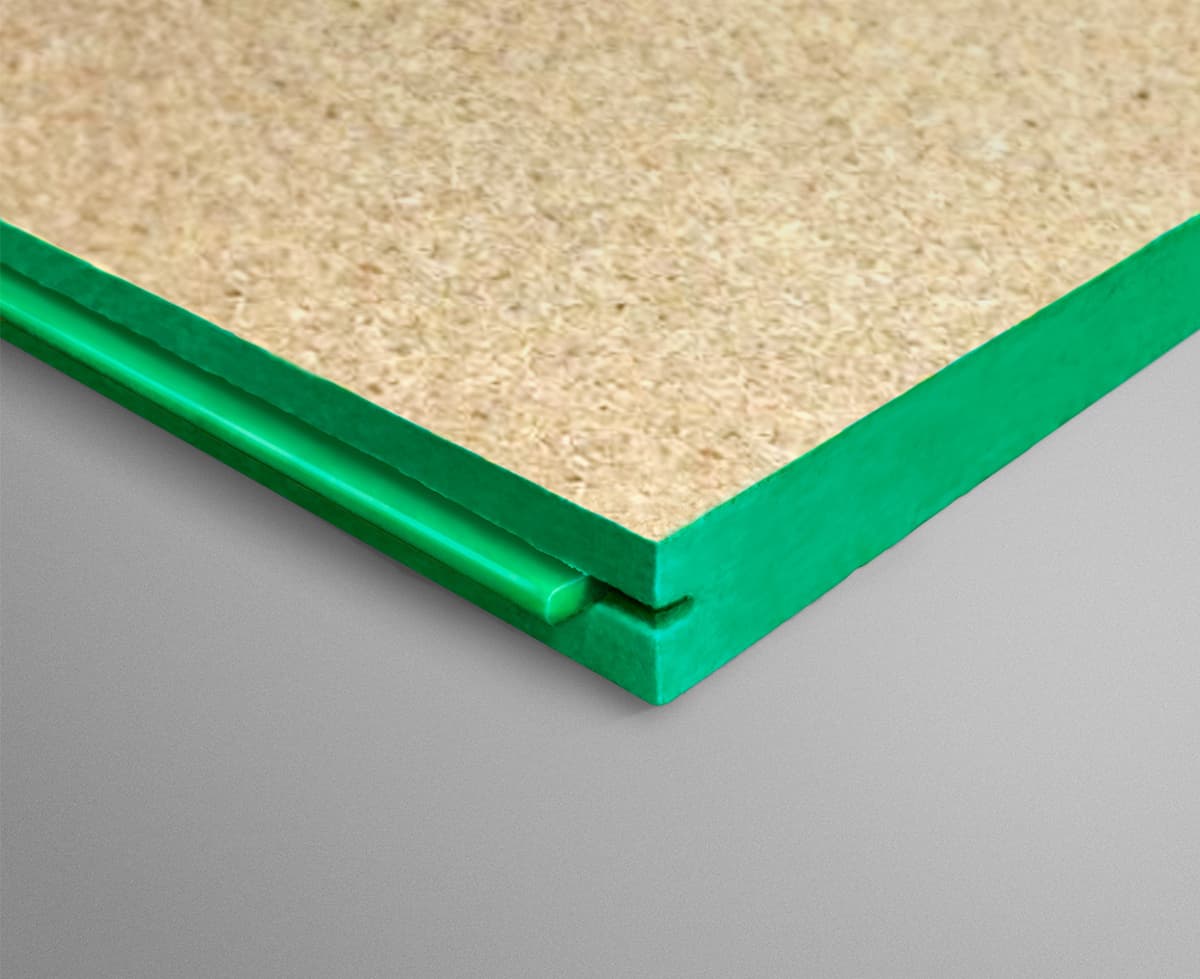
Know your sheets? Get a quote on yellow tongue flooring today.
Sizes and specification
The sheets are big, a full 3600 × 800 in 19mm and 22mm, covering ground quickly with fewer joins to fix and finish, and 19mm also comes as an 1800 × 800 half sheet for tight access. The 25mm board is 3600 × 600. Tongue and groove edges with a wax seal knit the sheets together and hold off the weather through the build, laying up flat and staying quiet underfoot once the house is closed in. Every board is made to AS/NZS 1860.1, certified to carry residential and commercial floor loads and ready to pass inspection.
| Thickness | Sheet size | Coverage | Weight | Joist centres |
|---|---|---|---|---|
| 19mm | 3600 × 800 (1800 × 800 half sheet) | 2.88 m² / sheet | about 13 kg/m² | up to 450mm |
| 22mm | 3600 × 800 | 2.88 m² / sheet | about 15 kg/m² | up to 600mm |
| 25mm | 3600 × 600 | 2.16 m² / sheet | about 17 kg/m² | 600mm, heavier loads |
The boards are bonded with a moisture resistant resin and are low formaldehyde emission (E0 to E1), so they suit modern homes and indoor air requirements. The glue bond and structural rating are what separate this from ordinary chipboard, which is not made to carry floor loads.
General Purpose, termite treated and Ultimate
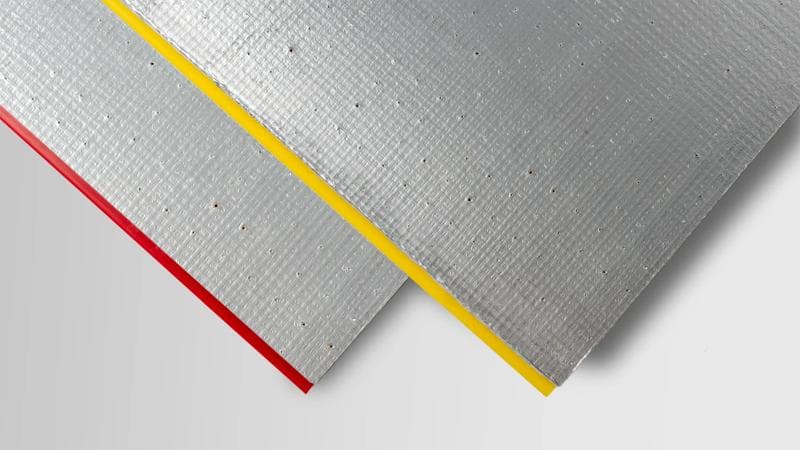
General Purpose is the everyday board for most homes. It is moisture resistant, takes the knocks of a normal build and dries out if it cops rain before the roof goes on. Termite Treated (H2) is treated against termites and backed by a 25 year guarantee, the sensible pick in a termite prone area, and works within a termite management system to AS 3660.1. Ultimate is the premium board: a metallised foil layer on the underside reflects radiant heat and lifts the floor’s R value, keeping the home warmer in winter, cooler in summer and cheaper to run. It is termite treated, BAL 29 rated for bushfire areas, and carries a longer 7 month exposure warranty for a longer build.
Installing yellow tongue flooring
Sheets glue and screw to timber or steel joists, tongue and groove edges engaged and end joints staggered over the joists. Leave a 10mm gap around the perimeter for expansion, and on continuous floors wider than 6m an intermediate expansion joint as well, so the floor can take up seasonal movement without lifting or buckling. It suits platform construction, where the floor goes down before the walls, and fitted construction between them. A framed particleboard subfloor goes down quickly, saving labour against a poured slab. Screw fixing is preferred, and the surface handles weather exposure during the build, though the sooner it is closed in the better.
Subfloor ground clearance and ventilation
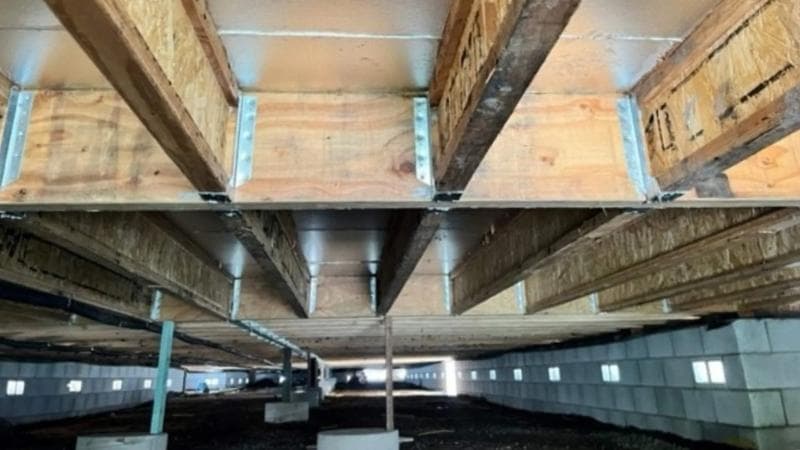
A dry, well ventilated subfloor is what keeps a particleboard floor flat and quiet. Allow at least 400mm ground clearance under the bearers for untreated framing, or 150mm where the framing is termite treated, and slope the ground and downpipes so water drains away from the building. Ventilate the subfloor to suit your climate, add cross flow or a ground moisture barrier such as builders plastic where airflow is limited, and check the subfloor moisture content is below 14% before you lay any floor covering over the top.
Guides and datasheets
The manufacturers’ own installation guides and data sheets, read here on the page or download.
Related guides
Particle board flooring FAQ
It is set by your joist spacing. 19mm (yellow or green tongue) suits joists up to 450mm centres, 22mm (red or beige) up to 600mm, and 25mm (blue or brown) for 600mm centres and heavier loads.
No. It is structural particleboard flooring, an engineered board of compressed wood particles bonded with moisture resistant resin and made to AS/NZS 1860.1. It is far denser and stronger than the chipboard used in furniture.
Today it is 800mm. The 900mm width was phased out in 2019, so every current sheet is a uniform 3600 × 800 (25mm is 3600 × 600). Uniform sizing means the sheets line up cleanly with no odd width to cut around, so the floor goes down faster.
The surface is resin enriched and the edges are wax sealed, so it is rated to handle weather exposure during construction, up to 5 months for General Purpose and Termite Treated and 7 months for Ultimate. It is an interior structural floor though, so keep water from ponding, sweep any pooled water away and enclose the building as soon as practical.
Yes, when the wet area is correctly waterproofed to AS 3740 over the top of the floor. The board is the structural substrate, not the waterproofing layer, so the waterproofing membrane does that job.
Yes with the right preparation, a suitable flexible or decoupling membrane and an adhesive rated for the tile system. The floor must be firmly glued and fixed so there is no movement, or tiles and grout can crack. Follow the tile and membrane manufacturer guidance.
As a permanent structural subfloor it lasts the life of the building when it is installed and kept dry to spec. Termite Treated (H2) board carries a 25 year termite guarantee and works within a termite management system to AS 3660.1.
Sheets are glued with construction adhesive and screwed or nailed to timber or steel joists, laid with the tongue and groove edges engaged and end joints staggered, with a 10mm gap at walls for expansion. Screw fixing is the preferred method. It suits both platform and fitted construction.
Yes. Allmat supplies yellow tongue flooring across Adelaide and South Australia, with pickup also available. Add what you need to a quote or call us.
Both are structural particleboard flooring to the same AS/NZS 1860.1 standard. The tongue colours differ by brand (Structaflor is yellow, red, blue and EnduraFloor is green, beige, brown) but the 19, 22 and 25mm specs match. Either brand may be supplied, so allow an equivalent to specification on your quote and we will supply whichever is available.
A squeak is almost always a loose fixing or a sheet that was nailed rather than glued and screwed. Locate the joist under the noise and re-screw the sheet down tight into it, with construction adhesive under any lifted edge. If a sheet has been soaked and swelled, the sound repair is to cut it out and replace it on the joist centres, then fix the water source and subfloor ventilation.
Both are structural subfloor sheets. Yellow tongue particleboard is the value option, stable and fast to lay, so it is the usual choice for enclosed platform floors. Structural plywood is lighter for its strength and handles repeated wetting and drying better, so it is often preferred for wet areas or floors that stay exposed. Tell us the job and we will point you to the right board.
Get a price on yellow tongue flooring
Build your list above, or send us your floor size and joist centres and we will work out the sheets and get a price back to you. Delivered across Adelaide and South Australia, pickup available.