Your Subfloor Options
Your subfloor options
There is more than one way to sheet a floor. Yellow tongue particle board, structural plywood flooring, OSB3 and fibre cement are all structural subfloor sheets that glue and screw to the joists and make a strong, flat floor. Which one is right comes down to your priorities, cost, moisture, strength and what your builder is set up to lay. Here is how they stack up, and where each one wins.
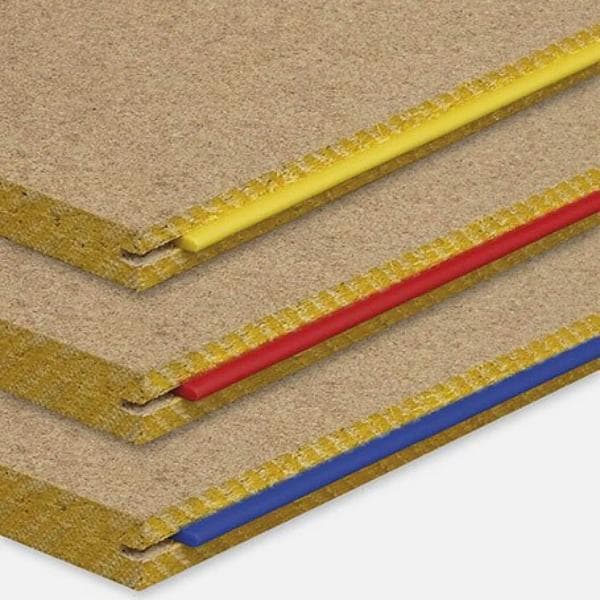
Yellow tongue particle board flooring
The everyday choice for enclosed platform floors. It lays fast in big tongue and groove sheets, sits flat and stays stable, and it is the value pick for a standard house floor that will be closed in and kept dry. It is the board most Australian homes are floored with, in 19, 22 and 25mm to match your joist spacing.
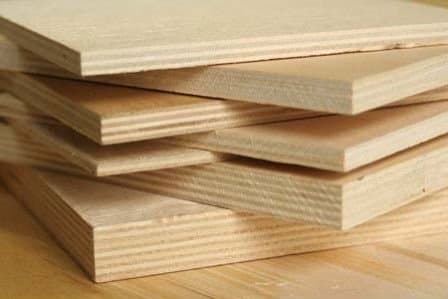
Structural plywood flooring
For a fair flooring comparison the like for like product is tongue and groove structural plywood flooring, an F11 or F14 board, not the plain CD sheet plywood you buy by the sheet. Plywood flooring is lighter for its strength and shrugs off repeated wetting and drying, which makes it the pick for floors that stay exposed for a long time or carry heavy point loads, and it comes in an H3 treated version for damp or exposed floors. It is a step up in price from particleboard, and in those spots it earns it.
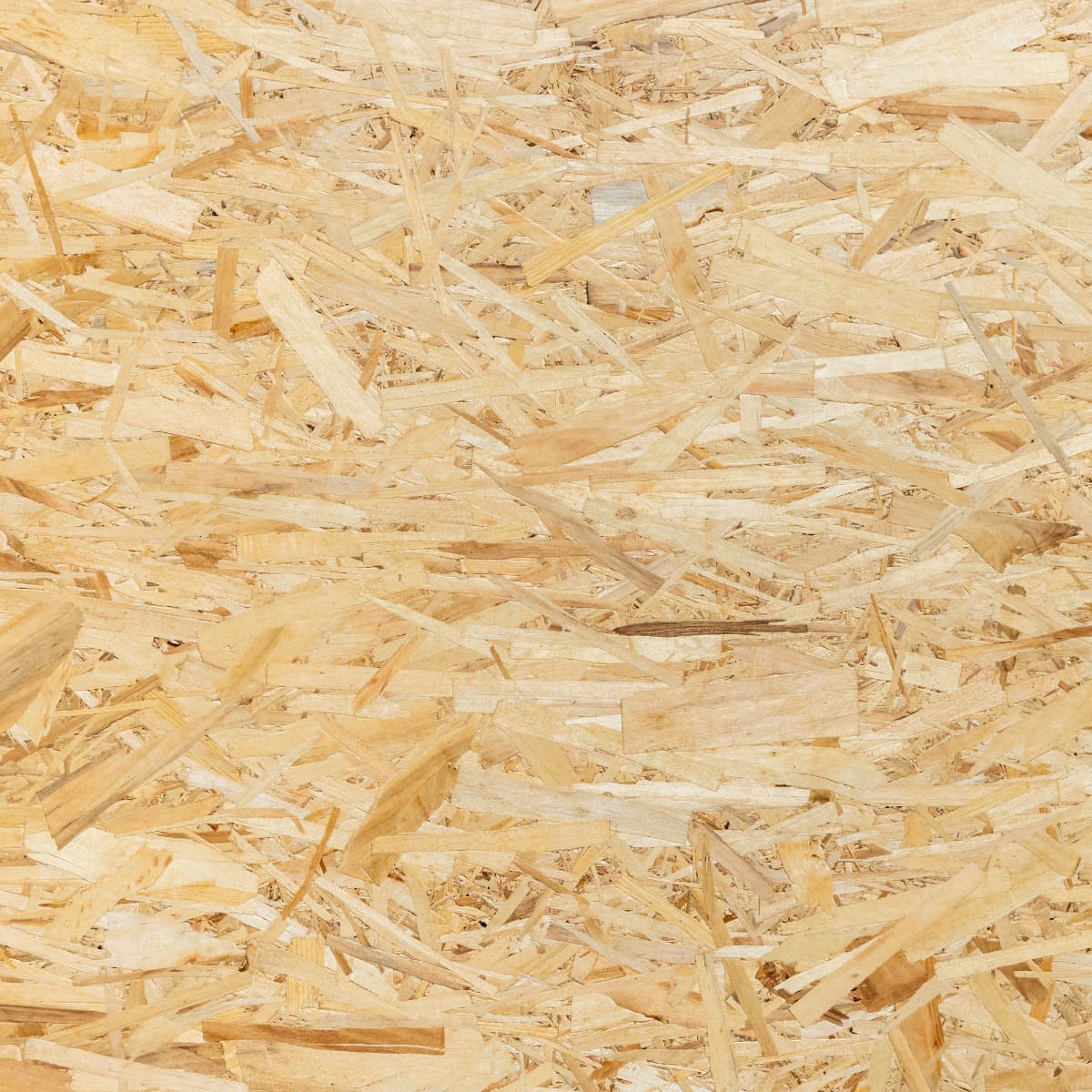
OSB3 tongue and groove flooring
OSB, oriented strand board, deserves a fairer hearing than it often gets. The grade that matters for a floor is OSB3, a load bearing board rated for humid conditions under the European standard EN 300, and in tongue and groove form it is a genuine structural floor: strong, stiff and more moisture tolerant than a standard particleboard sheet. Across most of the world it is the default subfloor, in North America, across Europe and increasingly through Asia. Australia and New Zealand are the odd ones out. We standardised on yellow tongue particleboard decades ago, so that is what the local supply chains carry, which is the main reason you rarely see OSB3 under an Australian floor, not any shortcoming in the board.
Fibre cement flooring
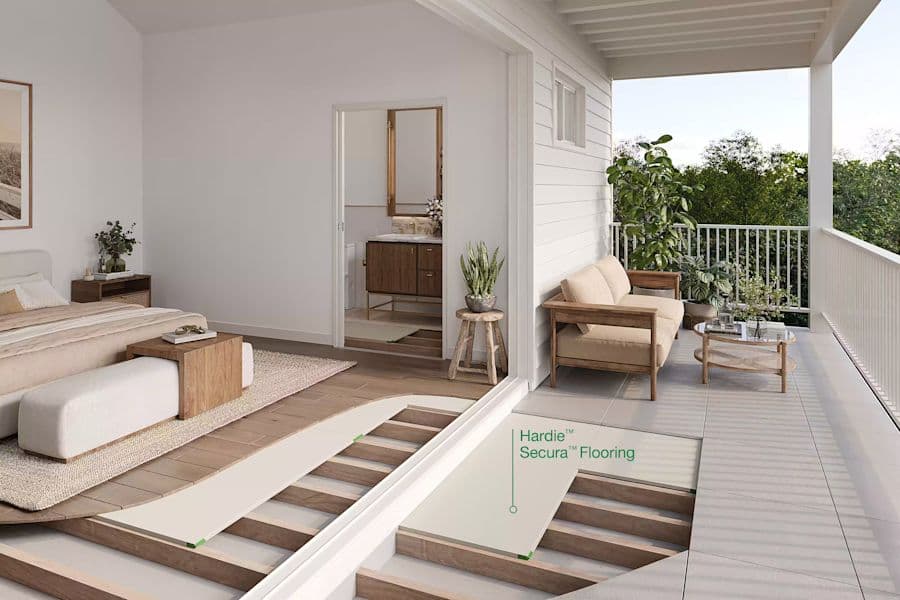
For a genuinely wet floor, a bathroom, laundry or balcony, neither timber based board is the long term answer. Fibre cement flooring, also called compressed fibre cement or cement sheet flooring, is built for constant moisture and takes tiles directly, the board to reach for where water is a fact of life rather than an accident.
How to choose
There is no single right answer, it comes down to what you are optimising for. For value and availability on a standard enclosed floor, yellow tongue particleboard is the Australian default. For the most strength and the best behaviour when exposed or heavily loaded, structural plywood flooring leads. OSB3 is strong, good value and moisture tolerant, and the overseas favourite, though it is uncommon under Australian floors. And where the floor is genuinely wet, a bathroom or a balcony, fibre cement is built for the job. If you would rather stay with particleboard but the subfloor runs damp, the foil backed Ultimate board holds moisture out far better than a standard sheet.
Whatever the floor calls for, Allmat supplies the whole build up, from the structural subfloor sheet to the underlay that goes under vinyl or carpet, like 5mm hardboard. Not sure what belongs in each room? See what subfloor you need, room by room. Or start a particle board flooring quote.
Choosing a subfloor FAQs
Neither is simply better. Yellow tongue particle board is stable, fast to lay and the value pick for enclosed platform floors. Tongue and groove structural plywood flooring is lighter for its strength and handles exposure better, so it suits floors that stay open to the weather or take heavy loads. For genuinely wet areas a fibre cement board is the right call. Match the board to the job.
It depends on your priorities. Plywood is the strongest, OSB3 is strong, good value and rated for humid conditions, and yellow tongue particleboard is Australia’s purpose made standard, engineered to AS/NZS 1860.1 and carried by every supplier. Particleboard is a touch less tolerant of prolonged wetting than OSB3 or plywood, so for a dry enclosed floor it is the value pick, while OSB3 or plywood earn their place where moisture or heavy loads come into it. There is no single right answer.
It is not the local standard, so you will not find it stacked at every yard. OSB3 tongue and groove is a genuine structural floor, load bearing and rated for humid conditions to EN 300, but in Australia the supply chains are built around particleboard and plywood flooring, which is what most floors are laid with here.
It comes down to how the two markets developed. Australia and New Zealand engineered their own purpose made flooring from local plantation pine, the colour coded yellow tongue board to AS/NZS 1860.1, with a smooth surface and a matched supply chain, and the industry standardised on it decades ago. North America went to OSB, largely on cost. Both work well where they are established; here, yellow tongue particleboard flooring is the readily available, purpose made residential subfloor.
Yes. Structural particle board flooring is made to AS/NZS 1860.1 and is engineered to carry residential and commercial floor loads over the correct joist spacing. It is a very different product to the chipboard used in furniture.
Yes, when the wet area is correctly waterproofed to AS 3740 over the top of the floor. The board is the structural substrate, not the waterproofing layer. For floors that stay exposed or damp, structural plywood or the foil backed Ultimate board are worth considering.
Get a price on particle board flooring
Send us your floor size and joist centres, or build a quote online, and we will work out the sheets and get a price back to you.