
A4-70 · Class 4.6 · Class 8.8
Foundation Stud
Foundation studs for holding down steel columns and plant in footings, plus engineering studs and 316 tap end studs.
About the Foundation Stud
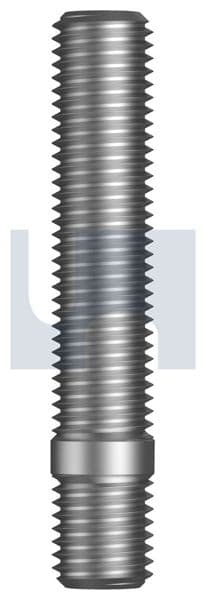
Foundation studs are straight lengths of heavy threaded rod (DIN 976) cast or set into footings to hold down steel columns, plant and structures, to the engineer's drawings. They come hot dip galvanised class 8.8 (M20 to M36, 1,200 to 1,600mm), plain class 8.8 (M30 x 1,200mm) and hot dip galvanised class 4.6 (M24 to M48, 1,100 to 1,600mm), plus short engineering studs (HEC 938, plain class 4.6, M10 to M20) and 316 stainless tap end studs (M16 and M20). Choose the class, finish, size and length above; the guide below covers sizes, the strength figures Hobson publishes and finishes.
Also called holding down studs, foundation rods or tap end studs.
Features
- For building foundations
- Threaded top for nut/washer
- Galvanised and self-colour
Applications
- Holding down steel columns and plant in footings
- Cast-in or resin-set studs to the engineer's design
- Engine blocks and cylinder heads (316 tap end studs)
What is a foundation stud?
Hobson describes its foundation studs as threaded rod in lengths ideal for use in building foundation applications. They are DIN 976 allthread: threaded end to end, so a nut and washer can go on wherever the job needs them. Hobson's bolts and screws article defines a stud as a fastener with no head, threaded at one end, both ends or all the way, used with one or two nuts.
On site, foundation studs are set into concrete footings, piers and slabs to hold down steel columns, base plates and other structure: cast in to the engineer's detail during the pour, or fixed into hardened concrete with an anchoring system the engineer specifies, such as a chemical anchor. Hobson's data sheet for its hot dip galvanised class 4.6 rod (the ASMSGCM codes these studs belong to) lists concrete anchoring and cyclone tie-down rods, says installation as a tie-down rod should be carried out according to AS 1684.3, and publishes no capacity, so any such use is to the engineer's specification.
Hobson publishes no load capacity in concrete, embedment depth, edge distance, spacing or anchor plate detail for these studs. How a stud holds in concrete is part of the structural design, so the class, size, length, embedment, spacing, edge distance and any nut or plate at the bottom come from the engineer's drawings.
Foundation studs and engineering studs: which is which
- Foundation studs, class 8.8, hot dip galvanised (DIN 976): Hobson's Sampsonrod and foundation stud sheet lists them for building foundations. M20 to M36, 1,200 to 1,600mm.
- Foundation stud, class 8.8, plain: M30 x 1,200mm with no coating. See the finish section before using plain steel anywhere it will see the weather.
- Foundation studs, class 4.6, hot dip galvanised (DIN 976): the mild steel option, M24 to M48. Hobson's Did You Know sheet for the M36 studs notes NATA reports are available for ultimate tensile strength.
- Engineering studs (HEC 938): short studs with a thread at each end. Hobson's sheet for the 316 studs calls them tap end studs and says the shorter thread (T1) equals the diameter and screws into an existing tapped hole, and the longer end takes the part being fixed; it lists engine blocks and cylinder heads. The M16 x 100 has T1 16mm and T2 76mm, the M20 x 110 has T1 20mm and T2 80mm. The plain class 4.6 studs are made to the same HEC 938 specification; the documents we hold do not give their thread lengths. They are not foundation studs.
Foundation stud sizes
Every foundation and engineering stud we carry. Select a row to open that class, finish and size in the selector, then pick the length.
Thread is diameter x pitch (mm). Lengths in mm. Pack is the minimum order quantity; where it reads 1 to 2, the shorter lengths come in pairs and the longer ones singly. Tap a number to show it in the selector above.
| Type | Class and finish | Thread | Lengths (mm) | Pack |
|---|---|---|---|---|
| Foundation stud, DIN 976 | ||||
| Foundation stud, DIN 976 | Class 8.8, hot dip galvanised | M20 x 2.5 | 1,200, 1,400 | 5 |
| Foundation stud, DIN 976 | Class 8.8, hot dip galvanised | M24 x 3 | 1,200, 1,400 | 2 |
| Foundation stud, DIN 976 | Class 8.8, hot dip galvanised | M30 x 3.5 | 1,200, 1,400, 1,500, 1,600 | 2 |
| Foundation stud, DIN 976 | Class 8.8, hot dip galvanised | M36 x 4 | 1,200, 1,400, 1,500, 1,600 | 1 to 2 |
| Foundation stud, DIN 976 | Class 8.8, plain | M30 x 3.5 | 1,200 | 2 |
| Foundation stud, DIN 976 | Class 4.6, hot dip galvanised | M24 x 3 | 1,200, 1,400 | 2 |
| Foundation stud, DIN 976 | Class 4.6, hot dip galvanised | M30 x 3.5 | 1,200, 1,400, 1,500, 1,600 | 2 |
| Foundation stud, DIN 976 | Class 4.6, hot dip galvanised | M36 x 4 | 1,100, 1,200, 1,400, 1,500, 1,600 | 1 to 2 |
| Foundation stud, DIN 976 | Class 4.6, hot dip galvanised | M42 x 4.5 | 1,500 | 1 |
| Foundation stud, DIN 976 | Class 4.6, hot dip galvanised | M48 x 5 | 1,600 | 1 |
| Engineering stud, HEC 938 | ||||
| Engineering stud, HEC 938 | Class 4.6, plain | M10 x 1.5 | 100 | 50 |
| Engineering stud, HEC 938 | Class 4.6, plain | M12 x 1.75 | 100 | 25 |
| Engineering stud, HEC 938 | Class 4.6, plain | M16 x 2 | 110 | 25 |
| Engineering stud, HEC 938 | Class 4.6, plain | M20 x 2.5 | 110 | 10 |
| Tap end stud, HEC 938 | ||||
| Tap end stud, HEC 938 | 316 stainless (A4-70) | M16 x 2 | 100 | 25 |
| Tap end stud, HEC 938 | 316 stainless (A4-70) | M20 x 2.5 | 110 | 10 |
Strength: proof load of the rod, not a hold-down capacity
Hobson publishes minimum proof loads for its threaded rod. They describe the steel of the rod only. They are not a safe working load, and not the capacity of a stud set in concrete, which also depends on the concrete, embedment, edge distance and spacing, none of which Hobson publishes for these studs. Use them only as the engineer directs.
The two classes are not interchangeable: at each size, class 8.8 has about 2.7 times the minimum proof load of class 4.6 (211.8kN against 79.4kN at M24). Never substitute class 4.6 where 8.8 is specified.
Minimum proof loads in kN, for the foundation stud sizes we carry. Class 4.6 from Hobson's hot dip galvanised class 4.6 threaded rod data sheet (200723DS) and its Allthread Properties sheet (2306081D): where the two sheets differ (M30, M36) the lower figure is shown. Class 8.8 from Hobson's Allthread Properties sheet (2306081D), which uses a proof stress of 600MPa above M16. A dash means we do not carry that size in that class. Test values for the rod only: not a working load or a capacity in concrete. Tap a number to show it in the selector above.
Galvanised or plain: finish for the site
Hobson's sheet for its hot dip galvanised class 4.6 allthread says it is galvanised to AS 1214 to a minimum of 40µm and an average of 50µm, for external applications, and its finish comparison rates hot dip galvanising as high corrosion resistance, recommended for long term outdoor use.
Hobson's corrosion guide covers atmospheric exposure only (enclosed, sheltered and exposed); it does not cover steel cast into concrete or buried in the ground, so the durability of the embedded part is set by the engineer. For the thread, nut and washer above the concrete, the guide's minimum where they are exposed to the weather (its examples include decks, pergolas and open sub-floors) is hot dip galvanising or 304 or 316 stainless, and in the sea spray zone stainless only. Our foundation studs are galvanised or plain; for coastal sites ask the engineer.
The plain class 8.8 stud and the plain engineering studs have no coating and are supplied lightly oiled to inhibit rust in the packaging. Plain steel is not a minimum for any exposure in Hobson's corrosion guide, so use plain only where the engineer's specification calls for it.
Setting foundation studs to the drawings
Hobson publishes no installation instructions for these studs. The points below are general site practice, not Hobson instructions:
- Order the class, size and length shown on the drawings, and check the class on the label: class 4.6 and 8.8 studs look alike.
- Cast-in studs: hold them in position with a template that matches the base plate holes, so they stay at the right spacing, projection and plumb while the concrete is poured and vibrated, and keep the projecting thread clean.
- Post-installed studs: drill, clean and set them with the anchoring system the engineer specifies, following that product's installation guide for hole size, embedment and curing.
- Fit the nuts and washers to the specification on the drawings. They are sold separately.
- Need the paperwork? Hobson's sheets say test certificates and reports can be downloaded from its website.
Foundation studs in Adelaide
Allmat supplies foundation studs, foundation bolts, nuts, washers and chemical anchors to builders, concreters and steel erectors across Adelaide and South Australia. Send us the stud schedule from your drawings and we will price the lot.
Foundation studs for footings and base plates
Foundation studs, engineering studs, nuts, washers and chemical anchors are available to order from Allmat for builders, concreters, steel fabricators and erectors and trade across Adelaide and South Australia. Order through Allmat, we pick and pack it, then click and collect from the Allmat yard or have it delivered to site.
Goes with
Questions
What is a foundation stud?
A straight length of threaded rod set into a concrete foundation, with a nut and washer on the projecting thread to hold down a base plate, column or other structure. Ours are DIN 976 rod in hot dip galvanised class 8.8 and 4.6, and plain class 8.8.
What is the difference between a foundation stud and an L-shaped foundation bolt?
A foundation stud is straight allthread, threaded end to end. An L-shaped foundation bolt has a bend (cog) at the bottom to key into the concrete and a set thread length at the top. Which one the job needs, and how it is anchored, comes from the engineer's design.
How deep should a foundation stud go into the concrete?
As deep as the engineer's drawings say. Hobson publishes no embedment depth, edge distance, spacing or capacity in concrete for these studs, so they cannot be picked from a table.
Class 4.6 or class 8.8 foundation studs?
Whichever the drawings specify. Class 8.8 has about 2.7 times the minimum proof load of class 4.6 at each size, so never swap a 4.6 stud in where 8.8 is called for.
Are foundation studs galvanised?
Most are: the class 8.8 studs from M20 to M36 and the class 4.6 studs from M24 to M48 are hot dip galvanised, which Hobson rates high corrosion resistance for long term outdoor use. The M30 x 1,200mm class 8.8 stud is also available plain, with no coating.
What is a tap end stud?
An engineering stud with a short thread at one end that screws into a tapped hole and a longer thread at the other for the nut. On Hobson's 316 studs the short end equals the diameter. We carry tap end studs in M16 and M20 316 stainless; the plain class 4.6 engineering studs (M10 to M20) are made to the same HEC 938 specification.
Where can I buy foundation studs in Adelaide?
Order through Allmat. Order ahead by phone on 1300 03 03 63 or send your list for a quote, then click and collect from 25 Kapara Road, Gillman, or have them delivered to site.
Foundation Stud: sizes and finishes we supply
32 lines by type and finish. Pick one above for its product code and pack sizes.
| Type | Finish | Sizes | Lengths | Lines |
|---|---|---|---|---|
| Foundation Stud | Galvanised | M20, M24, M30, M36, M42, M48 | 1100, 1200, 1400, 1500, 1600 | 25 |
| Engineering Stud | Steel | M10, M12, M16, M20 | 100, 110 | 4 |
| Engineering Stud | 316 Stainless | M16, M20 | 100, 110 | 2 |
| Foundation Stud | Steel | M30 | 1200 | 1 |
Data sheets and documents
The documents for the product you choose are listed with the selector above. Here is every Foundation Stud document from Hobson Engineering.
All Foundation Stud documents (17)
Data sheets and technical data (6)
Did You Know flyers (4)
Need them in bulk?
Add the sizes you need to your quote, or send us your list and we’ll price the lot and supply it with the rest of your order.
Browse all allthread