
Strip, pad or pier footings
A strip footing runs under a wall: 10m of it at 450mm wide and 300mm deep is 1.35 m³. A pad sits under a single post or stump. A pier is a round hole, often formed with a cardboard tube.
Footing sizes come from your plans or engineer. This calculator turns those sizes into concrete and bags; it does not design the footing.
Concrete pier and tube volumes
A round pier is a cylinder: 3.1416 × radius × radius × height. A 300mm pier 1.2m deep holds 0.085 m³, or 0.11 cubic yards.
Footings in colder countries
In the US and Canada a footing has to sit below the local frost line, which can be over a metre down. Australian building rules have no frost-depth requirement, so check your own local rules if you are building somewhere that freezes.
Questions
Length × width × depth in metres gives cubic metres. For a round pier use 3.1416 × radius × radius × depth. Add 5% for the sides of the hole.
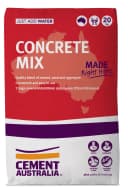
A 300mm round pier 1.2m deep holds about 0.085 m³, about 10 x 20kg bags of Concrete Mix with 5% extra.
Yes. Choose "Round column or pier" and enter the tube diameter and height.
Concrete Mix suits footings on small projects; PROSTRENGTH Extra Strength gains strength faster. Rapid Set is not for footings that carry load.
Goes with this job
Disclaimer
This calculator gives estimates from the sizes you enter, using manufacturers' published figures and standard geometry. It is not engineering or design advice. Footing, slab and beam sizes must come from your plans or engineer. Allow for site conditions, spillage and uneven ground. Check quantities with your supplier before ordering. Allmat accepts no responsibility for decisions made using these estimates.
Sources
- Cement Australia: Concrete Mix
- Cement Australia: frequently asked questions
- Allmat arithmetic (this calculator)
Last checked 5 October 2026.
Cite this page
Allmat, "Concrete footing, pier and sonotube calculator", https://allmat.com.au/concrete-calculator/footings, checked 5 October 2026.