
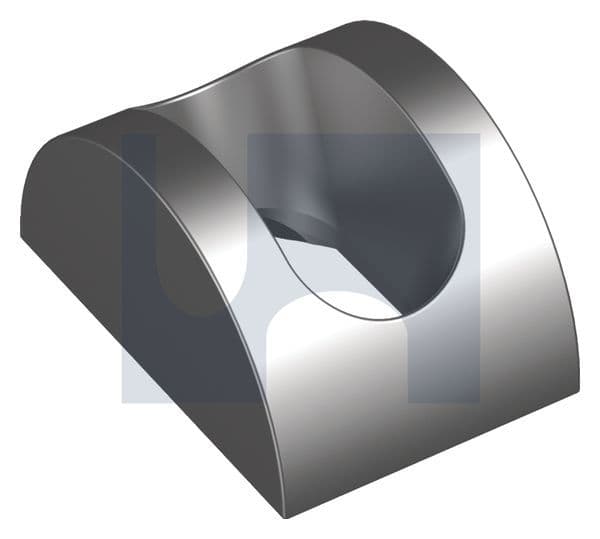
Low-Tensile / Cyclone
Wind Bracing Bracket
Zinc plated malleable cast iron wind bracing D bracket, fitted into a hole cut in the steel.
About the Wind Bracing Bracket
Wind bracing brackets anchor the end of a bracing rod in the steel frame of sheds, workshops and portal frame buildings: the bracket sits in a hole cut in the steel and the rod passes through its slot. They are zinc plated malleable cast iron D brackets in M12/M16, M20, M24 and M30. Hobson publishes no load capacity for them, so the bracing comes from the building's design. Choose the size above; the guide below covers the dimensions, the hole size and fitting.
Also called wind brace D brackets or rod bracing brackets.
Features
- Malleable cast iron
- Zinc plated (RoHS compliant)
- Metric M12 to M30
- For wind bracing
Applications
- Rod bracing in steel sheds and workshops
- Portal frame buildings
- Anchoring bracing rods in steel members
What a wind bracing D bracket does in rod bracing
Rod bracing, also called wind bracing, is the X of steel rods in the roof and walls of steel sheds, workshops and portal frame buildings. Each rod runs on a diagonal between frames, so where it passes through a rafter or column it meets the steel at an angle. A wind bracing D bracket is the seat for it: a half round (D shaped) cast block with a slotted hole. Hobson's data sheet shows the bracket set into a hole cut in the steel member, with the bracing rod through the slot and the washer and nut tightened onto its rounded face.
Hobson makes these brackets in malleable cast iron, zinc plated, as part of its low tensile range, and sizes them by metric thread: M12/M16, M20, M24 and M30. Hobson publishes no load capacity, working load or design rating for them. The rod size, the bracket, the bracing layout and how the rods are tensioned come from the engineering design for the building, or the shed maker's design and instructions for a kit shed. Do not change, substitute or add bracing without that design.
Wind bracing bracket sizes and the hole to cut
Hobson gives the hole to cut in the steel as dimension A by dimension F plus dimension I, where A is the width of the hole and F plus I its length, as labelled on the drawing in Hobson's wind bracing D bracket data sheet (linked on this page, with the bracket's other dimensions). The table shows those three and works out the hole for each size.
Dimensions A, F and I in mm from Hobson's wind bracing D bracket technical data sheet (220318TD), malleable cast iron, zinc plated. Hole to cut = A x (F + I), Hobson's rule, worked out per size. Pack is the minimum order. Tap a number to show it in the selector above.
How a wind bracing bracket is fitted
The steps below follow Hobson's data sheet and photo. Hole positions, rod size and the tension in the rods come from the design.
- Check the bracket size against the bracing rod size on the drawings or the shed maker's instructions.
- Cut the hole in the steel member to Hobson's size, A x (F + I): 18 x 41mm for the M12/M16 bracket, 21 x 46mm for M20, 26 x 66mm for M24 and 33 x 85mm for M30.
- Seat the bracket in the hole with the bracing rod running through its slot.
- Fit the washer and nut onto the rounded face of the bracket, as Hobson's photo shows, and tension the rod as the design requires. Hobson gives no tightening torque or tension figure for the bracket.
Zinc plated: where it suits
Hobson's coating guide rates zinc plating (5 micron) as low corrosion resistance and recommends it for indoor and non-corrosive environments. It rates hot dip galvanising (50 micron) as high corrosion resistance, recommended for long term outdoor use. Hobson's corrosion guide for metal connectors (written for timber framing connectors, but a useful yardstick) sets the minimum protection by exposure and zone:
- Inside a fully enclosed, dry building in a very low or low hazard zone (Hobson's guide puts most of Australia more than 50km from the coast in the low zone): zinc plating is the minimum the guide lists.
- Enclosed buildings in coastal, industrial or sea spray zones: the guide asks for galvanised Z275 or better, so zinc plating is below its minimum there.
- Sheltered work (roofed but open sided, such as open sheds, carports and verandahs): galvanised Z275 in very low and low zones; Z275 with a soft seal coating or 304 or 316 stainless in coastal and industrial zones; 304 or 316 stainless in sea spray zones. Zinc plating is below the minimum for sheltered work in every zone.
- Exposed to the weather: 304 or 316 stainless or hot dip galvanising (304 or 316 stainless only in sea spray zones). We do not list a galvanised or stainless D bracket, so have the designer specify the bracket and its corrosion protection for sheltered, exposed or coastal work.
- Within 2m of a pool edge: the guide calls for 316 stainless.
Wind bracing brackets in Adelaide
Allmat supplies wind bracing D brackets, threaded rod, nuts and washers to shed builders, steel fabricators and erectors across Adelaide and South Australia. Send us the bracing details from your drawings and we will price the lot.
Wind bracing brackets for steel framing
Wind bracing D brackets, threaded rod, nuts and washers are available to order from Allmat for shed builders, steel fabricators, erectors and trade across Adelaide and South Australia. Order through Allmat, we pick and pack it, then click and collect from the Allmat yard or have it delivered to site.
Goes with
Questions
What is a wind bracing bracket used for?
It seats a diagonal bracing rod where the rod passes through a steel rafter or column in rod bracing (wind bracing), typically in steel sheds and portal frame buildings. The bracket sits in a hole cut in the steel and the rod passes through its slot, with a washer and nut on its rounded face.
What size hole do I cut for a wind bracing D bracket?
Hobson's rule is dimension A by dimension F plus dimension I from its data sheet: 18 x 41mm for the M12/M16 bracket, 21 x 46mm for M20, 26 x 66mm for M24 and 33 x 85mm for M30.
What load does a wind bracing bracket take?
Hobson publishes no load capacity or working load for these brackets. The bracing rod size, bracket and layout must come from the engineering design for the building, or the shed maker's design for a kit shed.
Which bracket size do I need?
Hobson sizes the brackets by metric thread: M12/M16, M20, M24 and M30. Match the bracket to the bracing rod size on the drawings. They come in packs of 50 (M12/M16), 40 (M20), 20 (M24) and 10 (M30).
Can I use zinc plated wind bracing brackets on an open shed or carport?
Hobson recommends zinc plating for indoor and non-corrosive environments, and its corrosion guide for metal connectors sets galvanised Z275 or better as the minimum for roofed but open sided (sheltered) work, and stainless or hot dip galvanising for work exposed to the weather. Zinc plating is below both. We do not list a galvanised or stainless D bracket, so have the designer specify the bracket and its protection for open, exposed or coastal buildings.
What are wind bracing brackets made of?
Malleable cast iron, zinc plated, per Hobson's data sheet.
Where can I buy wind bracing brackets in Adelaide?
Order through Allmat. Order ahead by phone on 1300 03 03 63 or send your list for a quote, then click and collect from 25 Kapara Road, Gillman, or have them delivered to site.
Wind Bracing Bracket: sizes and finishes we supply
4 lines by finish. Pick one above for its product code, pack sizes and dimensions.
| Finish | Sizes | Lines |
|---|---|---|
| Zinc Plated | M12/M16, M20, M24, M30 | 4 |
Data sheets and documents
The documents for the product you choose are listed with the selector above. Here is every Wind Bracing Bracket document from Hobson Engineering.
All Wind Bracing Bracket documents (3)
Data sheets and technical data (2)
Guides and articles (1)
Need them in bulk?
Add the sizes you need to your quote, or send us your list and we’ll price the lot and supply it with the rest of your order.
Browse all allthread